
Stanford Education: Can AI Transform or Threaten Your Career Path?
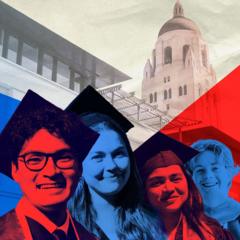
Discover what Stanford University graduates reveal about artificial intelligence's impact on careers. Explore if AI is a gateway or obstacle for your profession...
Stanford Graduates Share Honest Perspectives on Artificial Intelligence
A comprehensive investigation conducted by the BBC has brought to light the candid opinions of Stanford University alumni regarding artificial intelligence and its profound implications for their professional futures. These accomplished graduates, who earned their credentials from one of the world's most prestigious institutions, offer valuable insights into how artificial intelligence is reshaping career trajectories across multiple sectors.
Understanding the Dual Nature of AI in Career Development
The conversation surrounding artificial intelligence's role in modern careers remains complex and multifaceted. Stanford's distinguished alumni present contrasting viewpoints that reflect the broader societal debate about technology's influence on employment opportunities. For many graduates, artificial intelligence represents both promising possibilities and legitimate concerns about professional security.
Opportunities: How AI Can Enhance Professional Growth
Several Stanford graduates interviewed highlighted the transformative potential of artificial intelligence in their respective fields. These professionals acknowledge that strategic engagement with AI technologies can significantly amplify productivity, streamline workflows, and create entirely new career opportunities. Artificial intelligence applications are enabling specialists to focus on high-value strategic work while automation handles routine tasks, thus elevating the sophistication of professional contributions.
The graduates emphasize that understanding and leveraging artificial intelligence has become essential for maintaining competitive advantage in contemporary job markets. Organizations increasingly seek professionals who can collaborate effectively with AI systems, suggesting that technological literacy represents a valuable asset for future career advancement.
Challenges: Concerns About Technology-Driven Disruption
Conversely, other Stanford alumni expressed legitimate reservations about artificial intelligence's potential to displace workers across various industries. These graduates worry that rapid technological advancement may render certain skill sets obsolete faster than professionals can adapt. The concern isn't merely theoretical—artificial intelligence is already automating tasks previously requiring human expertise, creating uncertainty for career planners at all experience levels.
Notable among these discussions is the concern that educational credentials alone, even from prestigious institutions like Stanford, may not provide sufficient protection against technological displacement. Graduates recognize that artificial intelligence evolution demands continuous learning and professional reinvention throughout careers.
The Stanford Advantage in an AI-Driven Future
What emerges from these interviews is that Stanford University's emphasis on critical thinking, problem-solving, and adaptive learning provides graduates with valuable tools for navigating artificial intelligence's challenges. The institution's culture of innovation and technological engagement positions alumni to either leverage AI for advancement or respond strategically to disruption.
Stanford education has traditionally prepared students to lead technological change rather than simply react to it. This proactive positioning becomes increasingly important as artificial intelligence capabilities expand and reshape professional landscapes.
Key Takeaways for Current and Future Students
The Stanford graduates' perspectives suggest several important conclusions about artificial intelligence in professional development. First, technological literacy and understanding AI fundamentals are no longer optional skills—they represent essential components of modern professional competence. Second, the value of liberal arts education alongside technical training provides crucial flexibility for career adaptation.
Additionally, the interviews underscore that artificial intelligence's ultimate impact depends heavily on individual choices regarding skill development and professional positioning. Rather than viewing AI as purely threatening or purely beneficial, successful professionals appear to be those who engage strategically with these technologies.
Looking Forward: Building Resilient Careers in the AI Era
As artificial intelligence continues advancing, the Stanford alumni interviewed stress the importance of developing complementary human skills—creativity, emotional intelligence, complex communication, and ethical reasoning. These distinctly human capabilities represent areas where artificial intelligence currently struggles, positioning professionals who cultivate these strengths for long-term career security.
The consensus among many Stanford graduates reflects neither blind technological optimism nor pessimistic resignation. Instead, they advocate for informed engagement with artificial intelligence, continuous learning, and strategic career management that leverages both human strengths and technological capabilities. Their collective wisdom suggests that education from institutions like Stanford remains valuable precisely because it teaches graduates how to think critically about transformative technologies rather than simply accepting predetermined outcomes regarding artificial intelligence's role in their professional futures.


