Warsh Initiates Federal Reserve Review Following First Rate Decision
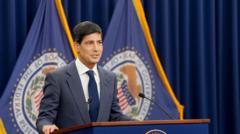
Warsh leads Federal Reserve's first meeting, maintaining US interest rates between 3.5%-3.75%. Discover implications of the central bank's latest policy decisio...
Warsh Leads Federal Reserve Through Initial Policy Meeting
The Federal Reserve interest rates remain steady as Kevin Warsh presides over his first official meeting as chairman of the nation's central bank. The policy committee decided to maintain rates within the 3.5% to 3.75% range, signaling continuity in monetary policy during a transition period of leadership.
This decision represents a crucial moment for Warsh, who assumed control of the Federal Reserve at a time when economic conditions require careful navigation. The stability demonstrated through the interest rate decision reflects the institution's measured approach to managing inflation while supporting economic growth.
Understanding the Policy Implications
The Federal Reserve interest rates decision carries significant weight for the broader economy. By keeping rates steady, the central bank signals confidence in current inflation management strategies while avoiding sudden shifts that could disrupt financial markets or consumer confidence.
Warsh's approach during this inaugural meeting demonstrates a commitment to evidence-based decision-making. The choice to maintain the existing rate band rather than implement immediate changes suggests the new leadership intends to thoroughly evaluate current economic data before pursuing alternative policy directions.
Planned Institutional Review Process
Beyond the immediate rate decision, Warsh has indicated intentions to conduct a comprehensive examination of how the Federal Reserve operates. This review initiative extends beyond typical policy discussions, encompassing the institution's structural mechanics, communication strategies, and operational frameworks.
Such an evaluation could potentially reshape how the central bank executes monetary policy decisions. The review represents an opportunity to modernize procedures that may have become outdated or inefficient, while preserving the institutional integrity that markets and the public depend upon.
Market Reactions to Fed's Steady Approach
Financial markets responded to the Federal Reserve's decision with relative stability. Investors interpreted the rate hold as a sign that policymakers possess sufficient confidence in economic fundamentals to avoid hasty interventions. This measured response contrasts with scenarios involving surprise rate changes that typically generate increased volatility.
The 3.5% to 3.75% range represents the outcome of previous policy adjustments designed to address inflation concerns while maintaining employment levels. Warsh's decision to preserve this band indicates respect for prior institutional work while reserving flexibility for future modifications based on evolving conditions.
Warsh's Leadership Transition and Vision
Kevin Warsh brings substantial experience to his role, having previously served in various capacities within financial governance. His inaugural Federal Reserve meeting established a tone of thoughtful deliberation rather than dramatic policy shifts.
The central bank policy framework that Warsh inherits includes multiple transmission mechanisms designed to influence economic activity throughout the financial system. Understanding and potentially refining these mechanisms forms part of the broader review agenda.
Economic Context for the Decision
The Federal Reserve interest rates decision must be understood within the context of current economic conditions. Inflation metrics, employment figures, and growth projections all influenced the committee's deliberations during Warsh's first meeting.
By maintaining the existing rate parameters, the Federal Reserve signaled that recent inflation data, while improved from previous peaks, still warrants continued attention. This careful positioning allows Warsh and his colleagues to monitor economic developments before committing to specific rate trajectories.
Looking Ahead: The Comprehensive Review
The announcement of a thorough institutional review suggests Warsh views his tenure as an opportunity for constructive reassessment. This forward-looking perspective may yield improvements in how the Federal Reserve communicates policy decisions to markets and the general public.
Future meetings will likely provide greater clarity regarding specific areas under review and potential recommendations. The comprehensive examination promises to engage both Fed staff and external experts in evaluating best practices for monetary policy implementation.
As Warsh settles into his role, the Federal Reserve interest rates decision exemplifies the balanced approach his leadership intends to maintain, combining stability with openness to institutional improvement and innovation.