
Spain's PM Holds Traffickers Accountable Over 60K Migrant Surge
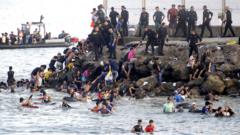
Spain's Prime Minister blames human traffickers after 60,000 migrants reach Ceuta from Morocco. Italy suspends Schengen agreement amid migration crisis response...
Spain's Government Responds to Massive Migration Influx
Spain's Prime Minister has attributed the arrival of approximately 60,000 migrants at Ceuta to organized trafficking networks operating across the Morocco-Spain border. This migrant crisis Spain Ceuta represents one of the most significant border incidents in recent European history, triggering immediate diplomatic and security responses from Madrid and neighboring nations.
The unprecedented surge of individuals crossing into Spanish territory has prompted swift action from government authorities. By Friday evening, Spanish officials reported that the majority of those who had crossed into Ceuta had already returned to Moroccan soil, following coordinated efforts between local law enforcement and border control agencies.
Italy's Controversial Decision on Border Controls
The situation escalated further when Italy announced its suspension of the Schengen agreement provisions governing free movement with Spain. This significant step reflects growing tensions within the European Union regarding border management and migration policy. The temporary suspension of the agreement represents a dramatic measure, underscoring Italy's concerns about Spain's capacity to manage its external borders effectively.
Understanding the Human Trafficking Network
Behind this human trafficking Morocco operation lies a complex network of smugglers and traffickers who exploit vulnerable individuals seeking entry to Europe. These criminal organizations charge substantial sums to arrange dangerous sea crossings and land routes, often with minimal regard for passenger safety. The coordinated nature of the 60,000-person movement suggests sophisticated planning and resources managed by experienced trafficking networks.
Spanish authorities have intensified their investigation into these criminal operations, working to identify key figures and dismantling the infrastructure supporting illicit migration routes. The involvement of organized trafficking groups raises questions about the scale of smuggling operations across North African ports and transit points.
Schengen Agreement Implications
The Schengen agreement suspension announced by Italy carries significant implications for European migration policy and inter-state cooperation. The Schengen Area, which permits free movement across borders for residents, represents a cornerstone of European integration. Italy's decision to temporarily suspend this arrangement with Spain signals deep concern about the efficacy of border controls and the potential for secondary migration within EU territory.
This move reflects broader anxieties about the capacity of external border states to manage irregular migration flows effectively. Historically, border suspensions within the Schengen framework have been rare, making Italy's action particularly noteworthy and concerning for European policymakers.
Border Security and Migration Control
The incident has prompted renewed discussions about migration control Spain and broader Mediterranean border security strategies. Spain's geographical position as Europe's southwestern gateway makes it particularly vulnerable to maritime migration routes originating from West Africa and Morocco.
Spanish border authorities have reinforced security measures at Ceuta and Melilla, the two Spanish enclaves on the African continent. Enhanced screening procedures, increased personnel deployment, and improved surveillance technology have been mobilized to prevent similar incidents. The response demonstrates the resource-intensive nature of managing large-scale irregular migration movements.
Regional Cooperation and European Response
Addressing this crisis requires extensive coordination between Spanish authorities, Moroccan government agencies, and EU institutions. The European Commission has emphasized the importance of joint responsibility and shared burden-sharing arrangements for migration management. Spain has called for enhanced support from other EU member states and increased funding for border security infrastructure.
Morocco's cooperation has proven essential, as most of the 60,000 individuals returned voluntarily or through coordinated repatriation efforts. This suggests relatively effective diplomatic channels between Madrid and Rabat, despite the challenging circumstances surrounding the migration surge.
Long-Term Solutions and Policy Implications
The border security Mediterranean remains a critical focus area for European policymakers and security experts. This incident underscores the necessity for comprehensive migration strategies addressing root causes, including poverty, conflict, and limited economic opportunity in source countries.
Spanish and EU authorities continue developing multilayered responses combining enforcement, humanitarian assistance, and diplomatic engagement with North African partners. The sustainability of Europe's migration policies depends on balancing security concerns with international humanitarian obligations and respect for human rights principles.
As investigations into the trafficking networks continue, the incident serves as a stark reminder of the dangers faced by vulnerable individuals and the sophisticated criminal organizations exploiting their desperation. The coordination required to manage such large-scale movements highlights the complexity of modern migration challenges in the Mediterranean region.


