
Rapid Cooling Claims: Internet's Viral Portable AC Units Under Fire
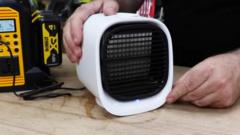
Fake portable air conditioners promising 90-second cooling face advertising investigation. ASA challenges misleading claims about small device effectiveness.
Portable Air Conditioners Making False Promises Online
The advertising landscape has become increasingly saturated with misleading claims about portable air conditioners that promise impossibly fast cooling solutions. These fake portable air conditioners are spreading rapidly across digital platforms, attracting millions of consumers seeking affordable climate control alternatives.
Consumer protection authorities have launched formal investigations into manufacturers and retailers promoting these devices through exaggerated marketing tactics. The core issue centers on advertisements claiming that small, compact cooling units can achieve substantial temperature reductions in remarkably short timeframes—a claim that contradicts established thermodynamic principles.
What the ASA Investigation Reveals
The Advertising Standards Authority (ASA) has determined that promotional materials for these fake portable air conditioners contain assertions that are fundamentally misleading and impossible to substantiate. Marketing claims suggesting that compact devices can cool entire rooms in seconds or minutes lack scientific foundation and violate consumer protection regulations.
According to the ASA's findings, manufacturers have systematically misrepresented the capabilities of their portable air conditioner products through various advertising channels. These deceptive tactics have proven particularly effective on social media platforms where visual demonstrations and testimonials spread with minimal scrutiny.
How Consumers Are Being Deceived
Individuals purchasing these fake portable air conditioners often discover significant performance gaps between advertised capabilities and actual results. Consumers report that devices marketed as powerful cooling solutions deliver minimal temperature reduction or operate with inconsistent effectiveness.
The misleading advertising typically employs several common tactics: exaggerated before-and-after demonstrations, fabricated customer reviews, inflated technical specifications, and sensational claims about energy efficiency. These portable air conditioner advertisements frequently target individuals in warm climates or those experiencing heatwaves, exploiting legitimate cooling needs.
Technical Limitations Ignored
Legitimate cooling devices require adequate ventilation, proper installation, and sufficient time to regulate room temperature effectively. Fake portable air conditioners often ignore these fundamental requirements in their marketing materials. The ASA investigation specifically highlighted that these portable air conditioner products cannot physically achieve the claimed cooling speeds without violating basic physics principles.
Market Impact and Consumer Complaints
The proliferation of fake portable air conditioner units has generated thousands of consumer complaints across multiple jurisdictions. Online marketplaces have become primary distribution channels for these misleading products, with reviews frequently contradicting manufacturer claims.
Financial losses extend beyond individual purchases, as consumers invest in fake portable air conditioner systems expecting legitimate climate control solutions. Frustration levels intensify when buyers attempt returning products and encounter unresponsive sellers or restrictive return policies.
Regulatory Response and Action
Advertising authorities have implemented stricter oversight of portable air conditioner marketing claims. The ASA's enforcement actions include removing misleading advertisements, issuing formal warnings to retailers, and requiring corrective advertising campaigns from non-compliant manufacturers.
Regulatory bodies continue investigating distribution networks and supply chains connected to these fake portable air conditioner products. Authorities are coordinating international efforts to address cross-border deception involving online sellers based in multiple countries.
Compliance Requirements
Legitimate portable air conditioner manufacturers must now provide substantiated evidence supporting any performance claims before advertising approval. This includes technical specifications, third-party testing results, and realistic cooling capabilities based on room size and environmental conditions.
Consumer Protection Recommendations
Industry experts advise prospective buyers to research portable air conditioner products thoroughly before purchasing. Consumers should verify manufacturer claims through independent reviews, technical specifications, and realistic assessments of device capabilities.
Purchasing decisions regarding portable air conditioner units should consider factors such as cooling capacity (measured in BTU), room size compatibility, installation requirements, and energy consumption rates. Skepticism toward claims suggesting instantaneous or near-instantaneous cooling represents prudent consumer behavior.
Looking Forward
The fake portable air conditioner scandal demonstrates ongoing challenges in online consumer protection. Enhanced marketplace verification systems and stricter advertising standards will likely shape the future of portable air conditioner marketing regulations.
Consumers can report misleading portable air conditioner advertisements to relevant authorities, contributing to enforcement actions against deceptive manufacturers and retailers. Increased reporting facilitates regulatory intervention and protects other consumers from similar deception schemes.


