
Navy Opts for Drone-Armed Vessels Over Destroyer Replacement
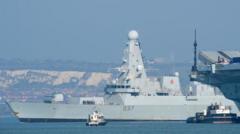
The Navy's new defense strategy prioritizes drone-equipped warships instead of replacing aging destroyers. Discover how this shift reshapes naval power.
Strategic Shift in Naval Defense Investment
The Navy's approach to maritime defense is undergoing a significant transformation, with drone-equipped warships becoming the focal point of the upcoming defense investment plan. Rather than allocating resources toward replacing aging destroyer fleets, military leadership has determined that unmanned vessel technology represents a more strategic allocation of defense funding in the modern era.
Government officials announced that drone-equipped warships will form a cornerstone of future naval capabilities, marking a departure from traditional procurement patterns. This decision reflects evolving assessments about operational effectiveness and cost-efficiency in contemporary naval warfare scenarios.
Why Drone-Equipped Warships Over Traditional Destroyers
The decision to prioritize drone-equipped warships addresses multiple strategic considerations. Traditional destroyers, while formidable assets, require substantial crews, ongoing maintenance, and significant operational expenses. Unmanned systems, by contrast, offer extended deployment capabilities with reduced personnel requirements and lower lifecycle costs.
Modern defense planners recognize that drone-equipped warships provide enhanced surveillance, reconnaissance, and engagement options without exposing personnel to direct combat risks. The technology enables broader area coverage and rapid response capabilities across maritime domains, making them particularly valuable for contemporary security challenges.
Impact on Naval Fleet Composition
This shift away from destroyer replacement programs will reshape naval operations considerably. The aging destroyer fleet, while remaining operational, will be supplemented and eventually supplemented by these advanced unmanned systems. The integration of drone-equipped warships into existing naval structures requires comprehensive training programs and infrastructure modifications at naval bases worldwide.
Military strategists anticipate that drone-equipped warships will handle an expanding range of missions, from anti-submarine warfare to surface protection and intelligence gathering. This expanded capability set justifies the investment reallocation, even as traditional destroyer platforms continue service.
Defense Investment Plan Details
The government's commitment to modern drone-equipped vessels represents a substantial redirection of defense spending priorities. Rather than massive capital expenditures on individual destroyer hulls, funding will support a distributed fleet of unmanned platforms with complementary capabilities. This approach provides greater flexibility in responding to emerging threats and operational requirements.
The investment framework acknowledges technological advancement as a central element of modern naval power projection. Drone-equipped warships demonstrate governmental commitment to maintaining maritime superiority through innovation rather than traditional force multiplication methods based on crewed vessel numbers.
Operational Advantages and Challenges Ahead
Implementation of this strategy presents both opportunities and challenges. Drone-equipped warships offer persistence, with extended operational endurance compared to crewed vessels constrained by crew fatigue and sustenance requirements. Communication networks and autonomous decision-making protocols require robust cybersecurity protections and international coordination frameworks.
Training personnel to operate and maintain drone-equipped warship systems represents a significant undertaking. Naval academies and training facilities must adapt curricula to develop expertise in unmanned systems operation, sensor integration, and coordinated multi-platform tactics.
International Implications and Competitive Landscape
This defense strategy positions the Navy competitively within the international maritime security context. Other naval powers are similarly investing in unmanned technologies, and this initiative ensures continued technological parity and operational advantage. Drone-equipped warships demonstrate commitment to 21st-century naval concepts rather than 20th-century platform acquisition patterns.
The transition to drone-equipped warships signals broader doctrinal evolution within maritime defense communities. Intelligence gathering, coastal surveillance, and rapid response scenarios increasingly favor unmanned platforms capable of operating in denied environments without crew risk exposure.
Long-Term Strategic Vision
Looking forward, the government's preference for drone-equipped warships over destroyer replacement reflects confidence in unmanned systems' long-term viability. Future defense budgets will likely continue emphasizing technological advancement in autonomous maritime platforms as traditional destroyer retirement accelerates.
This strategic direction ensures naval readiness adaptation, budgetary flexibility, and technological currency. The commitment to drone-equipped warships positions the military to address emerging maritime challenges while maintaining operational effectiveness across diverse geographic theaters and tactical scenarios.


