
Microsoft's Quantum Computing Lab in Denmark Reveals Future of Tech Innovation
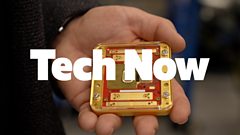
Discover how Adrienne Murray gains exclusive access to Microsoft's Quantum Lab in Denmark, exploring cutting-edge quantum computing research and its transformat...
Exclusive Access to Microsoft's Cutting-Edge Quantum Research Facility
The Microsoft Quantum Lab in Denmark represents one of the most sophisticated research centers dedicated to quantum computing development. Through remarkable circumstances, technology journalist Adrienne Murray has obtained rare access to this groundbreaking facility, providing unprecedented insights into the future of quantum computing research and its implications for global technological advancement.
Understanding the Significance of the Microsoft Quantum Lab
Located in Copenhagen, the Microsoft Quantum Lab Denmark serves as a pivotal hub for quantum research initiatives. This state-of-the-art facility brings together some of the world's leading physicists, engineers, and computer scientists working on quantum computing challenges. The laboratory's mission extends beyond theoretical exploration, focusing on practical applications that could revolutionize industries ranging from pharmaceuticals to cryptography.
The quantum computing field represents a paradigm shift in computational power. Unlike classical computers that process information using bits (ones and zeros), quantum computers utilize quantum bits or qubits, which can exist in multiple states simultaneously. This fundamental difference enables quantum systems to solve complex problems exponentially faster than conventional computing approaches.
Adrienne Murray's Unprecedented Laboratory Access
Adrienne Murray's exclusive opportunity to visit the Microsoft Quantum Lab Denmark marks a significant moment in technology journalism. Her access to this restricted facility allows for authentic reporting on the actual state of quantum computing development, moving beyond corporate announcements and theoretical discussions. This rare glimpse into operational quantum laboratories provides journalists and the public with credible information about technological progress.
The granted access encompasses various research divisions within the facility, enabling Murray to observe ongoing experiments, interview leading researchers, and document the practical challenges facing quantum computing development. Such transparency from Microsoft demonstrates the company's confidence in its quantum initiatives and commitment to public understanding of emerging technologies.
Current Quantum Computing Research Directions
The Microsoft Quantum Lab Denmark focuses on multiple research trajectories simultaneously. Topological qubits represent one primary research direction, utilizing exotic particles called anyons to create more stable and error-resistant quantum systems compared to other qubit designs. This approach addresses one of quantum computing's fundamental challenges: maintaining quantum coherence and minimizing computational errors.
Additional research areas include quantum algorithm development, quantum error correction methodologies, and practical applications across various scientific domains. The facility collaborates with academic institutions and industry partners to translate theoretical quantum physics concepts into functional computing systems capable of addressing real-world problems.
The Global Impact of Quantum Computing Advancement
Progress at the Microsoft Quantum Lab Denmark carries implications extending far beyond Denmark's borders. Quantum computing breakthroughs achieved in Copenhagen contribute to humanity's technological evolution and competitiveness in emerging fields. Nations and corporations worldwide recognize quantum computing's transformative potential, driving unprecedented investment and talent allocation toward quantum research initiatives.
The pharmaceutical industry stands to benefit substantially from quantum computing capabilities, as these systems could accelerate drug discovery and molecular simulation processes. Financial institutions explore quantum applications for portfolio optimization and risk analysis. Cryptography and cybersecurity fields acknowledge quantum computing's potential to render current encryption methods obsolete, necessitating development of quantum-resistant security protocols.
Microsoft's Strategic Position in Quantum Development
Microsoft's establishment and maintenance of the Quantum Lab Denmark reflects the company's strategic commitment to quantum computing leadership. Rather than limiting quantum research to headquarters locations, Microsoft strategically positioned quantum research facilities across multiple geographic locations, including collaboration with Danish universities and research institutions.
This distributed approach to quantum research leverages regional expertise, attracts international talent, and positions Microsoft favorably within the competitive quantum computing landscape. The Denmark facility specifically benefits from the region's strong tradition of physics research and its talented scientific community.
Challenges and Future Prospects
Despite remarkable progress, significant technical challenges persist in quantum computing development. Error rates remain substantially higher than required for practical applications. Scaling quantum systems from laboratory prototypes to commercially viable machines requires solving numerous engineering and theoretical problems. Temperature control, qubit stability, and quantum decoherence continue demanding innovative solutions.
Nevertheless, researchers at facilities like the Microsoft Quantum Lab Denmark maintain optimism about quantum computing's eventual realization. Incremental advances in qubit design, error correction algorithms, and quantum software development accumulate toward functional quantum computers capable of transforming computational capabilities.
Implications for Technology Journalism and Public Understanding
Adrienne Murray's rare access to the Microsoft Quantum Lab Denmark enables science journalism to bridge the gap between technical quantum physics and public comprehension. Detailed reporting from operational research facilities educates audiences about quantum computing realities, separating legitimate technological progress from speculative hype often surrounding emerging technologies.
This access strengthens public discourse around quantum computing's true capabilities and timelines, fostering more informed conversations about technological futures and enabling policymakers, investors, and industry leaders to make decisions grounded in actual scientific progress rather than theoretical possibilities.


