
Iran's Supreme Leader Absent at Senior Official's Funeral
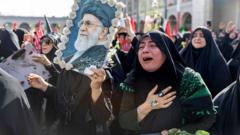
Iran's supreme leader was not present as top government officials attended a prominent ayatollah's funeral. The absence follows recent regional tensions.
Iran's Supreme Leader Notably Absent from High-Profile Funeral Ceremony
Iran's supreme leader has not made a public appearance since a significant attack that occurred at the beginning of heightened military tensions involving the United States, Israel, and Iranian forces. During this period of considerable political uncertainty, several prominent government officials gathered to pay respects at a ceremonial event, though Iran's supreme leader was conspicuously missing from the proceedings.
The absence of Iran's supreme leader from such an important state function has drawn considerable attention from international observers and regional analysts who closely monitor developments within the Iranian leadership hierarchy. The lack of public visibility from the nation's top authority figure during critical times raises questions about both his current status and the broader political dynamics within the Islamic Republic's governing structures.
Context Behind the Recent Attack
The incident that preceded this funeral ceremony represents a critical moment in the ongoing geopolitical conflict affecting the Middle Eastern region. The attack, which took place as military hostilities escalated between multiple regional and international players, marked a significant turning point in the crisis. Iran's supreme leader's father was among those affected during this turbulent period, contributing to the complex circumstances surrounding the current situation.
Following these dramatic events, Iran's supreme leader has maintained an unusually low profile, avoiding public engagements and official appearances that would normally be expected of someone in such a position of authority. This withdrawal from public view has fueled speculation among diplomatic circles and international media outlets regarding the underlying reasons for the extended absence.
Government Officials Pay Respects Despite Leadership Absence
Despite Iran's supreme leader not attending the funeral service, numerous high-ranking government officials and members of the political establishment participated in the ceremony. These individuals, representing various branches of Iran's governmental structure, demonstrated their presence and official recognition of the occasion through their attendance.
The gathering brought together ministers, parliamentary figures, and other state representatives who conveyed condolences and acknowledged the significance of the deceased within Iran's religious and political establishment. Their collective participation underscored the importance placed on such ceremonial occasions within the framework of Iranian governance, even as the nation's top authority remained absent from public view.
Implications of Leadership Absence
Iran's supreme leader's failure to appear at the funeral has sparked considerable discussion within diplomatic and intelligence communities about potential reasons underlying this decision. The public absence could reflect concerns about security, personal grievances, health matters, or deliberate messaging regarding Iran's response to recent military developments.
Political analysts suggest that such a high-profile absence during a moment requiring strong symbolic leadership presence may indicate deeper concerns or complications within Iran's power structure. The incident highlights the intricate nature of leadership succession and authority maintenance within the Islamic Republic's hierarchical system.
Regional Tensions and Their Impact
The broader context of escalating tensions between Iran, Israel, and their respective allies has dominated international headlines and shaped diplomatic responses from major world powers. These tensions have created an atmosphere of uncertainty that may directly influence domestic political decisions and public appearances by Iran's highest officials.
As the region continues to experience volatility and military posturing from multiple sides, observers note that Iran's supreme leader's absence from public view may represent a strategic decision reflecting the extraordinary nature of current circumstances. The combination of military conflict, domestic political considerations, and international diplomatic pressures creates a complex environment affecting decision-making at the highest levels of Iranian governance.
Ongoing Concerns About Leadership Visibility
Moving forward, international observers will continue monitoring Iran's supreme leader's public appearances and engagement levels as indicators of the nation's stability and leadership continuity. The extended absence from ceremonial functions and public events may provide important signals about the broader trajectory of events in this critical region.
The situation underscores the importance of understanding internal dynamics within Iran's government structure, particularly regarding succession planning and the concentration of power within key leadership positions. Until Iran's supreme leader resumes more visible public engagement, questions about the implications of his current absence will likely persist in diplomatic and analytical discussions worldwide.


