
Indonesia Earthquake: Rescue Teams Search for Survivors After Devastating Quake
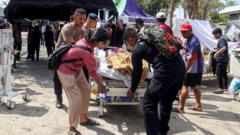
Rescue operations continue following a powerful Indonesia earthquake that destroyed hundreds of buildings and claimed 47 lives. Officials conduct rapid impact a...
Indonesia Earthquake Prompts Large-Scale Search and Rescue Operations
Following a powerful Indonesia earthquake that struck the region, rescue teams are intensifying their efforts to locate and recover survivors from the devastated areas. The seismic event has left a trail of destruction across multiple communities, with hundreds of structures reduced to rubble.
Emergency response personnel from various agencies have mobilized to affected zones, working around the clock to navigate through collapsed buildings and debris fields. The scale of the Indonesia earthquake has presented significant challenges to rescue coordinators, who must carefully manage limited resources while prioritizing high-probability survival locations.
Death Toll and Structural Damage Assessment
Preliminary counts indicate that the Indonesia earthquake has resulted in 47 confirmed fatalities, though officials caution that final numbers may change as assessment efforts continue. The extensive destruction encompasses hundreds of residential and commercial buildings across the affected region.
Beyond the immediate loss of life, the structural damage from this Indonesia earthquake has rendered numerous properties uninhabitable, creating urgent humanitarian concerns for displaced residents. Infrastructure damage includes compromised water supply systems, electrical networks, and transportation routes.
Official Response and Rapid Impact Evaluation
Government authorities have launched a comprehensive rapid assessment to evaluate the full scope of the Indonesia earthquake's devastating impact. This systematic evaluation is critical for determining resource allocation, identifying priority rescue zones, and establishing timelines for recovery operations.
Officials report that the assessment process involves multiple coordinating bodies working in conjunction to document building damage, identify missing persons, and map areas requiring immediate intervention. The rapid assessment protocol enables decision-makers to distribute emergency aid efficiently and direct rescue personnel to locations with the highest probability of locating survivors.
Rescue Team Operations and Survivor Recovery
Specialized rescue units equipped with detection technology and extraction equipment continue systematic searches through collapsed structures. These teams employ trained personnel and search dogs to locate survivors trapped beneath rubble and debris resulting from the Indonesia earthquake.
The search and rescue phase represents a critical window following the seismic event. Experience demonstrates that survivors trapped in structural voids can endure several days without assistance, making the current operations time-sensitive and demanding maximum coordination among all response agencies.
Supporting Affected Communities
Beyond rescue operations, relief organizations are establishing distribution centers for emergency supplies, medical assistance, and temporary shelter for those displaced by the Indonesia earthquake. These support services address immediate humanitarian needs while longer-term recovery planning progresses.
Medical facilities in the region are receiving patients with earthquake-related injuries, requiring surge capacity expansion and coordination with unaffected hospitals to manage patient transfers and provide specialized care.
Looking Forward: Recovery and Resilience
As rescue operations continue following this Indonesia earthquake, authorities are simultaneously beginning preliminary discussions regarding reconstruction priorities and building code improvements to enhance future seismic resilience. The recovery process will extend well beyond the initial rescue phase, requiring sustained commitment and resources.


