
Helium-3: The Lunar Fuel Resource That Could Power Earth
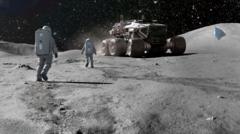
Discover what Helium-3 is and why mining this rare isotope from the moon could revolutionize global energy production in the coming decades.
Understanding Helium-3 and Its Growing Importance
Helium-3 is a rare isotope that has captured the attention of scientists, energy experts, and space agencies worldwide. This lightweight helium variant, distinct from the more common Helium-4, possesses unique properties that make it extraordinarily valuable for advanced energy applications. As global demand for cleaner and more efficient power sources intensifies, Helium-3 has emerged as a potential game-changer in addressing future energy challenges. The scarcity of this isotope on Earth has prompted researchers to explore alternative sources, with the moon emerging as the most promising candidate for future extraction operations.
What Makes Helium-3 Scientifically Significant?
Helium-3 differs fundamentally from its more abundant counterpart due to its atomic structure. Containing two protons and one neutron, this isotope can facilitate nuclear fusion reactions with significantly reduced radioactive byproducts compared to traditional nuclear processes. Scientists have long recognized that Helium-3 fusion could produce extraordinarily clean energy while minimizing dangerous waste materials. The potential fusion reactions involving Helium-3 would generate enormous amounts of power while creating minimal hazardous radiation, making it an attractive option for sustainable energy development.
Industrial and Medical Applications
Beyond energy production, Helium-3 serves critical roles in contemporary medical and scientific equipment. Medical imaging devices, cryogenic systems, and specialized research instrumentation rely on this isotope for optimal performance. These applications have created steady demand within healthcare and research sectors, further increasing competition for limited supplies. The multifaceted uses of this element have contributed to its increasing value in global markets.
Why Earth's Helium-3 Supply Is Critically Limited
The terrestrial scarcity of Helium-3 stems from Earth's atmospheric composition and geological history. Unlike Helium-4, which forms naturally through radioactive decay processes within our planet's crust, Helium-3 rarely accumulates in economically viable quantities. Atmospheric retention presents additional challenges, as this lightweight isotope can escape into space over geological timescales. Current global reserves remain extremely limited, creating supply constraints that have driven prices to extraordinary levels. This shortage has motivated researchers and commercial enterprises to investigate extraterrestrial sources.
The Moon: An Abundant Reservoir of Helium-3
Our moon harbors substantial quantities of Helium-3 embedded within its soil, accumulated over billions of years through solar wind interactions. The lunar regolith, or surface dust, contains concentrations of this valuable isotope far exceeding anything available on Earth. Scientific estimates suggest that the moon's Helium-3 reserves could address human energy requirements for centuries. The absence of magnetic shielding on the moon allowed solar particles to deposit their isotopic cargo directly into the surface material. This cosmic distribution has created what many consider a potential goldmine for future resource extraction.
Lunar Mining Technological Challenges
Extracting Helium-3 from the moon presents formidable engineering obstacles. Mining operations would require establishing permanent lunar facilities with advanced equipment capable of processing massive quantities of regolith. Temperature extremes, radiation exposure, and the harsh vacuum environment demand revolutionary technological solutions. Workers and equipment would face conditions unimaginable in terrestrial mining operations. Despite these obstacles, aerospace companies and research institutions have begun developing preliminary extraction methodologies.
Economic Feasibility of Lunar Resource Extraction
Current projections indicate that Helium-3's market value could eventually justify the substantial investment required for lunar mining operations. As terrestrial supplies diminish and demand accelerates, the isotope's price has climbed steadily. Some economists forecast that prices could reach levels where space-based extraction becomes economically rational. This potential profitability has attracted investment from private space companies and government agencies alike. The business case for lunar mining continues strengthening as energy demands increase globally.
International Initiatives and Future Prospects
Multiple nations have initiated research programs investigating Helium-3 recovery methodologies and lunar resource utilization frameworks. Space agencies are developing technologies that could eventually enable commercial-scale extraction. Private enterprises are simultaneously pursuing innovative approaches to lunar exploration and resource development. These parallel efforts suggest that operational lunar mining could emerge within coming decades. The convergence of necessity, technological advancement, and economic incentive creates conditions favorable for pursuing this ambitious objective.
Environmental and Energy Revolution Implications
Successfully establishing lunar Helium-3 mining could fundamentally transform global energy systems. Fusion reactors powered by this isotope would provide virtually limitless clean energy without greenhouse gas emissions or dangerous long-term radioactive waste. Such technology could eliminate energy scarcity while addressing climate change concerns simultaneously. The transition to Helium-3 fusion energy represents humanity's potential pathway toward sustainable abundance. This transformation could reshape civilization's relationship with energy resources and environmental preservation.


