
Glacier Collapse Triggers Catastrophic Floods in Nepal-Tibet Region
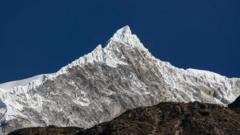
Scientists identify glacier collapse as the primary cause of devastating Nepal-Tibet floods, revealing growing concerns about Himalayan ice melt and climate imp...
Glacier Collapse Floods: Scientists Identify Primary Cause of Nepal-Tibet Disaster
Recent investigations conducted by leading scientific teams have established that a major glacier collapse floods event triggered the catastrophic flooding that devastated communities across the Nepal-Tibet border region. This findings underscore the accelerating crisis of melting Himalayan ice masses and their direct impact on downstream populations.
Scientific Evidence of Glacier Failure
Preliminary research by glaciologists and hydrology experts points conclusively to a significant glacier failure as the mechanism behind the devastating flooding. The glacier collapse released enormous quantities of ice, water, and debris into valley systems, creating powerful flood waves that swept through populated areas with devastating force. The evidence gathered during initial field assessments demonstrates the scale and intensity of this natural disaster.
Data collected from satellite imagery, ground surveys, and witness accounts corroborate the glacier failure hypothesis. Scientists observed substantial changes in glacial formations prior to the event, indicating structural instability. The collapse itself released stored water accumulated over decades within the ice mass, exponentially increasing flow volumes in downstream channels.
Himalayan Glaciers Under Severe Stress
This incident exemplifies the broader crisis affecting Himalayan glaciers across the mountain chain. The region's ice masses, which have remained relatively stable for centuries, now experience rapid melting cycles accelerated by rising global temperatures. Scientists report that numerous glaciers throughout the Himalayas demonstrate signs of instability similar to the collapsed formation in Nepal-Tibet.
Climate monitoring stations throughout the region document consistent temperature increases, with summer months reaching record highs. These elevated temperatures penetrate deep into glacial systems, weakening the structural integrity of ice masses and promoting melt acceleration. The phenomenon has transformed what were once predictable seasonal patterns into unpredictable and dangerous conditions.
Nepal Tibet Flooding Impact and Community Response
The Nepal Tibet flooding affected thousands of residents across multiple valleys and settlements. Emergency services mobilized rapidly to assist displaced populations and coordinate rescue operations. Local authorities reported infrastructure damage including destroyed bridges, compromised roads, and damaged agricultural land that sustained regional economies.
Communities downstream from the glacial source confronted flash flood conditions with minimal warning. The sudden surge of water, ice, and rock debris overwhelmed traditional flood mitigation systems designed for conventional monsoon patterns. Recovery efforts continue as affected regions assess damage and implement reconstruction strategies.
Climate Change and Glacial Vulnerability
The Nepal-Tibet flooding incident directly correlates with documented climate change glaciers effects throughout Asia's highest mountain ranges. Research institutions have documented systematic retreat patterns affecting thousands of glacier systems. Temperature anomalies now regularly exceed historical records, creating unprecedented pressure on ice stability.
Scientists emphasize that similar collapses may occur with increasing frequency unless global temperature trends reverse significantly. The rate of glacier retreat observed in recent decades far exceeds natural variation patterns, indicating anthropogenic climate influence. Modeling studies suggest that current warming trajectories will trigger additional catastrophic events in vulnerable glacier regions.
Mountain Glacier Melt and Downstream Consequences
The implications of mountain glacier melt extend far beyond the immediate disaster zone. Billions of people throughout South and Central Asia depend on glacial-fed river systems for water supply, agriculture, and hydroelectric power. As glacier masses diminish, these vital water resources face increasing uncertainty and seasonal variability.
Long-term glacier melt patterns threaten water security for downstream regions. Seasonal flow variations will intensify, creating both flood risks during melt periods and drought conditions during dry seasons. The interconnected nature of regional hydrology means that changes in Himalayan glaciers directly affect agricultural productivity, urban water supplies, and energy generation across multiple nations.
Scientific Monitoring and Future Preparedness
International research teams have intensified monitoring programs targeting high-risk glacier systems throughout the Himalayas. Advanced satellite technology enables continuous surveillance of structural changes and melt patterns. Scientists are developing early warning systems designed to alert communities of impending glacier collapses before catastrophic floods occur.
Governments and research institutions in affected regions are collaborating on disaster preparedness initiatives. These efforts include improved hazard mapping, community evacuation planning, and infrastructure improvements designed to withstand extreme flood events. Understanding the mechanisms behind glacier collapse remains essential for developing effective mitigation strategies.


