
Canada's Tariff Response Deepens Trade Tensions After Carney's 'Miscalculation' Warning
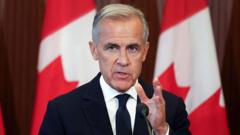
Canada announces retaliatory tariffs following failed trade talks. Carney warns Trump's tariff strategy is a costly miscalculation amid rising trade tensions.
Canada Announces Retaliatory Tariffs Amid Trade War Escalation
The escalating trade war tariffs between North America have reached a critical juncture as Canada's leadership responds forcefully to what officials describe as an economically damaging trade policy. In a significant development, Canada's prime minister has declared the nation's intention to implement retaliatory tariffs, marking a substantial shift in diplomatic relations between the two neighboring countries.
The announcement comes following the collapse of recent trade negotiations between Washington and Ottawa. Canadian officials expressed frustration over the breakdown, signaling that diplomatic channels have failed to prevent commercial confrontation. The prime minister's statement, delivered with clear reluctance, underscores the gravity of the situation and the limited options remaining for peaceful resolution.
Carney's Sharp Critique of American Trade Strategy
Canadian economic experts, particularly figures prominent in financial policy discussions, have characterized the new tariff approach as a fundamental miscalculation. These assessments challenge the underlying logic of the trade war tariffs, suggesting that the economic consequences extend beyond simple bilateral commerce to affect broader North American competitiveness.
The criticism centers on the belief that aggressive trade war tariffs create unintended consequences throughout integrated supply chains. Manufacturing sectors across both nations depend on cross-border component flow, meaning retaliatory measures inflict mutual economic damage. Analysts warn that sustained trade war tariffs could trigger inflationary pressures, reduced consumer purchasing power, and diminished business investment across North America.
The Breakdown of Diplomatic Negotiations
Recent trade talks collapsed after representatives failed to reach common ground on fundamental issues. The specific contention points remain economic disputes that both sides deemed non-negotiable. This breakdown represents a failure of diplomatic efforts to prevent escalation into a broader commercial conflict.
Canada's decision to implement retaliatory tariffs demonstrates that passive acceptance was not considered viable. Officials believe that failing to respond would signal weakness and invite further aggressive trade actions. However, the reluctance expressed during the announcement indicates genuine concern about the destructive consequences of tit-for-tat commercial measures.
Understanding the Broader Trade War Context
The current dispute emerges within a pattern of escalating trade tensions. Previous disagreements over agricultural products, automotive manufacturing, and industrial goods have created an atmosphere of mutual distrust. The latest developments suggest that foundational issues separating the nations remain unresolved despite multiple negotiation attempts.
Trade war tariffs affect numerous sectors including energy, agriculture, technology, and manufacturing. Canadian exporters face uncertainty regarding market access, while American producers confront retaliatory barriers. Small and medium-sized enterprises particularly vulnerable to sudden tariff implementations have expressed alarm about survival prospects in this hostile commercial environment.
Economic Impact Assessment
Preliminary analyses suggest significant consequences for both economies. Canadian businesses dependent on American markets face reduced demand and higher operational costs. Meanwhile, American consumers could experience price increases for goods previously sourced from Canada. The interconnected nature of North American economies means that trade war tariffs create systemic risk beyond simple bilateral trade calculations.
Employment figures could deteriorate as companies reduce operations or relocate production. Border communities particularly dependent on cross-border commerce face uncertain economic futures. Supply chain disruptions may extend beyond direct bilateral trade to affect global commerce patterns.
Future Outlook and Negotiation Prospects
The announcement of retaliatory tariffs does not represent the final word in this dispute. Both governments maintain channels for renewed negotiation, though the atmosphere has deteriorated significantly. Future diplomatic efforts must address fundamental concerns while preserving space for compromise. Whether additional trade war tariffs will follow remains contingent on subsequent policy decisions and negotiation outcomes.
The situation demonstrates how commercial disputes can rapidly escalate when diplomatic mechanisms fail. Moving forward, leadership on both sides faces pressure to restore dialogue while maintaining domestic political credibility with constituencies affected by trade policies. Resolution remains possible but increasingly difficult as retaliatory cycles deepen economic divisions.


