

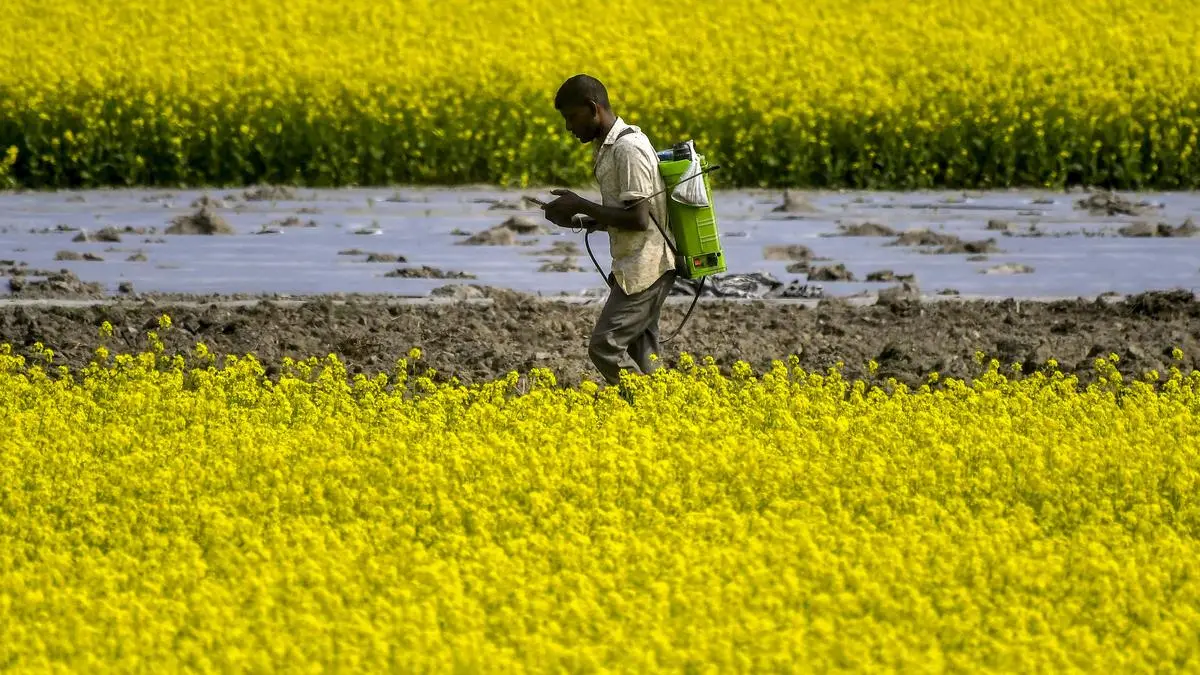
Transforming Rice Fallows into Productive Farmland with Rapeseed-Mustard Cultivation: A Remarkable Opportunity
P K Rai, a renowned agricultural expert, has recently highlighted the immense potential of transforming rice fallows into productive farmlands through the cultivation of rapeseed-mustard. This innovative approach not only offers a remarkable opportunity for farmers but also has the potential to address various challenges faced by the agricultural sector.
Rice cultivation has been the mainstay of Indian agriculture for centuries, but the increasing demand for food and shrinking land resources have put immense pressure on farmers to increase their productivity. This has led to the overuse of land, resulting in the depletion of soil nutrients and reduced crop yields. Moreover, the traditional practice of leaving the land fallow after the rice harvest has led to the wastage of valuable land resources.
Recognizing these challenges, P K Rai has proposed a solution that not only utilizes the fallow land but also replenishes the soil nutrients for better crop yields. The cultivation of rapeseed-mustard in rice fallows is a win-win situation for both farmers and the environment.
Rapeseed-mustard, also known as “Sarson” in Hindi, is a versatile crop that can adapt to a wide range of climatic conditions and soil types. It is a rich source of protein and oil, making it an essential ingredient in the Indian diet. The cultivation of rapeseed-mustard in rice fallows not only provides an additional source of income for farmers but also helps in diversifying their crops, reducing their dependence on rice cultivation.
One of the significant benefits of adopting rapeseed-mustard cultivation is its ability to improve soil health. The plant has a deep root system that helps in breaking up the compacted soil, allowing better aeration and water infiltration. It also acts as a natural fertilizer, enriching the soil with essential nutrients such as nitrogen, phosphorus, and sulfur. This, in turn, leads to healthier soil, increased crop yields, and reduced dependence on chemical fertilizers.
Furthermore, the cultivation of rapeseed-mustard also helps in weed control. The plant has allelopathic properties, which means it releases natural chemicals that inhibit the growth of weeds. This reduces the need for herbicides, making it an eco-friendly option for farmers. Additionally, the leftover plant residue can be used as mulch, further suppressing weed growth and retaining soil moisture.
Apart from the economic and environmental benefits, rapeseed-mustard cultivation also has a positive impact on the overall agricultural sector. The crop has a short growing season, which allows farmers to cultivate it as a second crop after the rice harvest. This not only maximizes the use of land but also provides a buffer against crop failure due to unforeseen weather events. The increased production of rapeseed-mustard also contributes to the country’s food security, reducing the need for imports.
The government has also recognized the potential of rapeseed-mustard cultivation and has taken several initiatives to promote it. The National Mission on Oilseeds and Oil Palm (NMOOP) has been launched to increase the production of oilseeds, including rapeseed-mustard, and reduce the country’s dependence on imports. Various subsidies and incentives have also been provided to encourage farmers to adopt this innovative approach.
In conclusion, the transformation of rice fallows into productive farmland through rapeseed-mustard cultivation is a remarkable opportunity that offers multiple benefits. It not only provides an additional source of income for farmers but also helps in improving soil health, reducing weed growth, and contributing to the country’s food security. It is time for farmers to embrace this innovative approach and reap the benefits of a sustainable and profitable agricultural system. As P K Rai rightly said, “The future of Indian agriculture lies in the rapeseed-mustard cultivation in rice fallows.”