

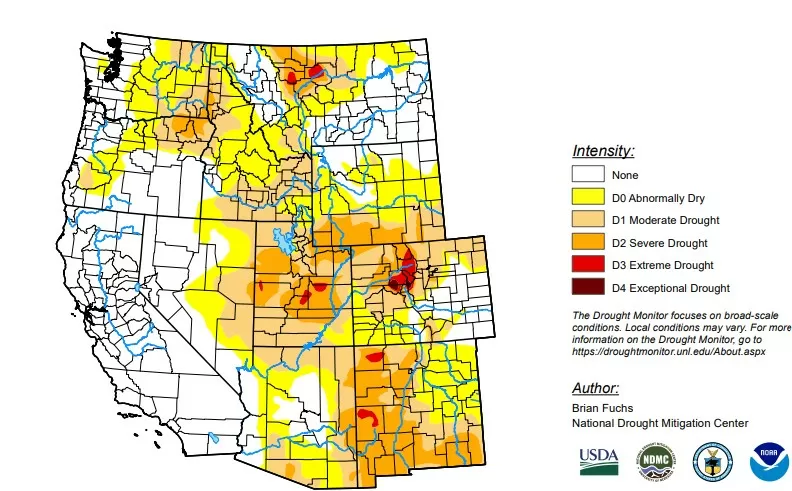
The recent Drought Monitor report has been making headlines and causing concern among many communities. As the effects of climate change continue to be felt worldwide, droughts have become a pressing issue that cannot be ignored. However, while it is important to pay attention to this report, experts are reminding us to keep the big picture in mind.
According to the Drought Monitor report, more than 50% of the United States is currently experiencing some level of drought, with some areas facing extreme or exceptional drought conditions. This is a cause for alarm as droughts can have devastating effects on agriculture, water supplies, and overall economic stability. It is understandable that many people are worried about the impact of these conditions on their daily lives.
But amidst all the concern, it is crucial to remember that the Drought Monitor report is just one piece of the puzzle. It is a snapshot of the current situation, but it does not necessarily reflect the long-term trends or the bigger picture. As experts point out, it is important to keep a broader perspective and not get caught up in the immediate data.
One key factor to consider is the cyclical nature of droughts. While it may seem like we are facing an unprecedented crisis, the truth is that droughts have been a part of our planet’s natural cycles for centuries. They come and go, and while they can be severe, they are not permanent. In fact, many areas that are currently experiencing drought have had similar conditions in the past and have bounced back.
Moreover, experts also remind us that drought is not a one-size-fits-all phenomenon. Different regions have different levels of vulnerability to drought, and the impact of drought can vary greatly depending on the area’s resources and infrastructure. Therefore, it is essential to consider the specific factors that contribute to drought in each region and work towards solutions that are tailored to their needs.
Another important aspect to keep in mind is the role of human activity in exacerbating drought conditions. Climate change is a major driving force behind the increasing frequency and severity of droughts. The burning of fossil fuels and other human activities have contributed to the rise in global temperatures, which in turn affects weather patterns and leads to more prolonged and intense droughts. It is crucial to address the root causes of climate change if we want to effectively combat drought in the long term.
Furthermore, it is essential to remember that droughts are not just a local issue, but a global one. The impact of drought in one region can have ripple effects on others, especially in terms of food production and prices. As we have seen in recent years, droughts in one part of the world can lead to food shortages and higher food prices in other regions. Therefore, it is crucial to work together on a global scale to address the issue of drought and its underlying causes.
Despite the challenges posed by drought, there is hope on the horizon. Many communities and organizations are taking proactive measures to mitigate the effects of drought. These include implementing sustainable water management practices, promoting conservation efforts, and investing in technology to improve water efficiency. These efforts, combined with a broader perspective on the issue, can help us navigate through droughts and build resilience for the future.
In conclusion, while the Drought Monitor report may be causing a lot of attention, it is vital to keep the big picture in mind. Droughts are a natural part of our planet’s cycle, and while they can be severe, they are not permanent. By understanding the broader perspective, addressing the root causes, and working together on a global scale, we can effectively combat the effects of drought and build a more sustainable future for all. Let us use this report as a call to action and continue to work towards a world where droughts are no longer a cause for concern.