

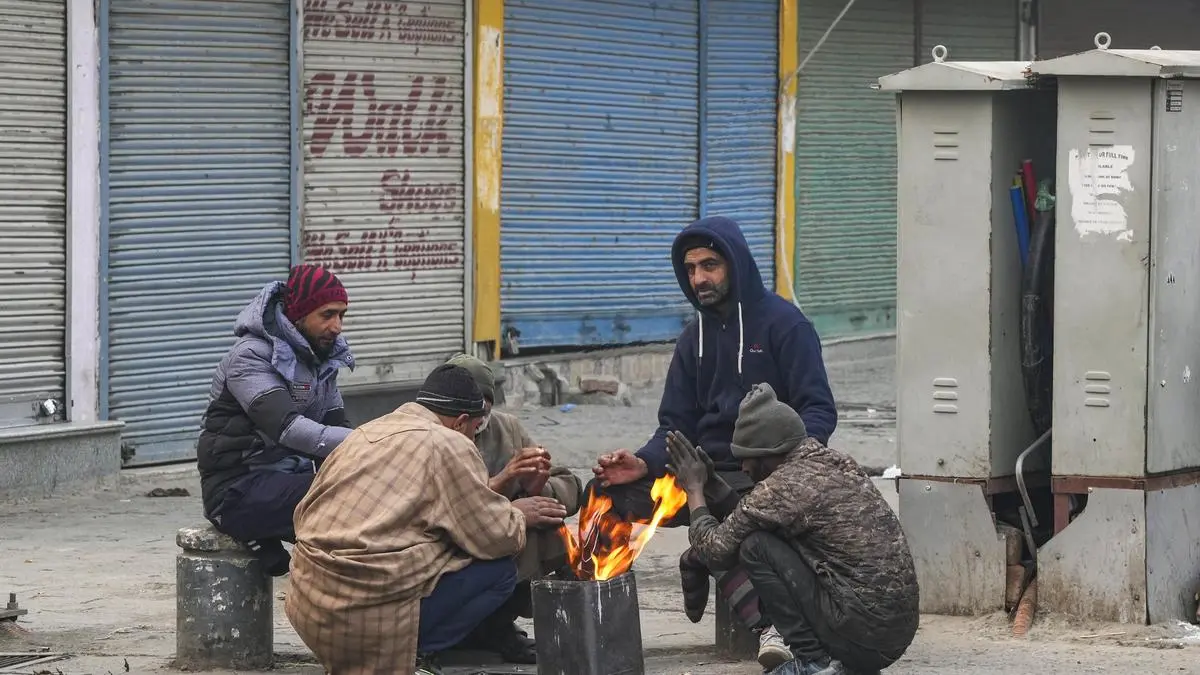
As we approach the end of the year, the weather patterns around the world are constantly changing. One of the most talked-about phenomena in recent years is the El Niño-Southern Oscillation (ENSO) cycle, which has a significant impact on global weather patterns. In the past few months, we have experienced a weak La Niña phase, and it looks like it will continue through December before transitioning into a neutral phase in January-March.
La Niña is a natural climate pattern that occurs when the sea surface temperatures in the central and eastern tropical Pacific Ocean are cooler than average. This cooling effect can have a significant impact on global weather patterns, causing droughts, floods, and other extreme weather events. On the other hand, a neutral phase means that the sea surface temperatures in the Pacific Ocean are close to their long-term average.
According to the latest report from the National Oceanic and Atmospheric Administration (NOAA), the current La Niña conditions are expected to continue through December, with a 95% chance of it persisting through the month. This means that we can expect to see below-average sea surface temperatures in the Pacific Ocean, which will have an impact on global weather patterns.
One of the most significant impacts of La Niña is on the Atlantic hurricane season. This year, we have seen an extremely active hurricane season, with a record-breaking 30 named storms. The presence of La Niña has played a significant role in this, as it creates conditions that are favorable for hurricane formation. However, as we move into the neutral phase, the conditions for hurricane formation are expected to decrease, which is good news for those living in hurricane-prone areas.
Another impact of La Niña is on global temperatures. As the Pacific Ocean cools, it can lead to a decrease in global temperatures. This has been observed in the past few months, with October 2020 being the second-warmest October on record, according to NOAA. However, as we move into the neutral phase, we can expect to see a slight increase in global temperatures.
In addition to these impacts, La Niña can also affect precipitation patterns around the world. In some regions, such as the western United States, La Niña can lead to drier conditions, while in other regions, such as Southeast Asia, it can bring heavy rainfall. This can have a significant impact on agriculture and water resources in these areas.
While La Niña can have both positive and negative impacts, it is important to note that it is a natural phenomenon that has been occurring for centuries. It is not something that can be controlled or predicted with 100% accuracy. However, with advancements in technology and our understanding of the climate, we can now better prepare for its impacts.
As we move into the neutral phase in January-March, we can expect to see a decrease in the impacts of La Niña. This is good news for those who have been affected by extreme weather events in the past few months. However, it is important to remember that even in a neutral phase, we can still experience extreme weather events, and it is crucial to stay informed and prepared.
In conclusion, the weak La Niña conditions that we have been experiencing are expected to continue through December before transitioning into a neutral phase in January-March. While La Niña can have significant impacts on global weather patterns, it is a natural phenomenon that we must learn to adapt to. As we move into the new year, let us stay informed and prepared for any potential weather events, and continue to work towards a more sustainable future.