

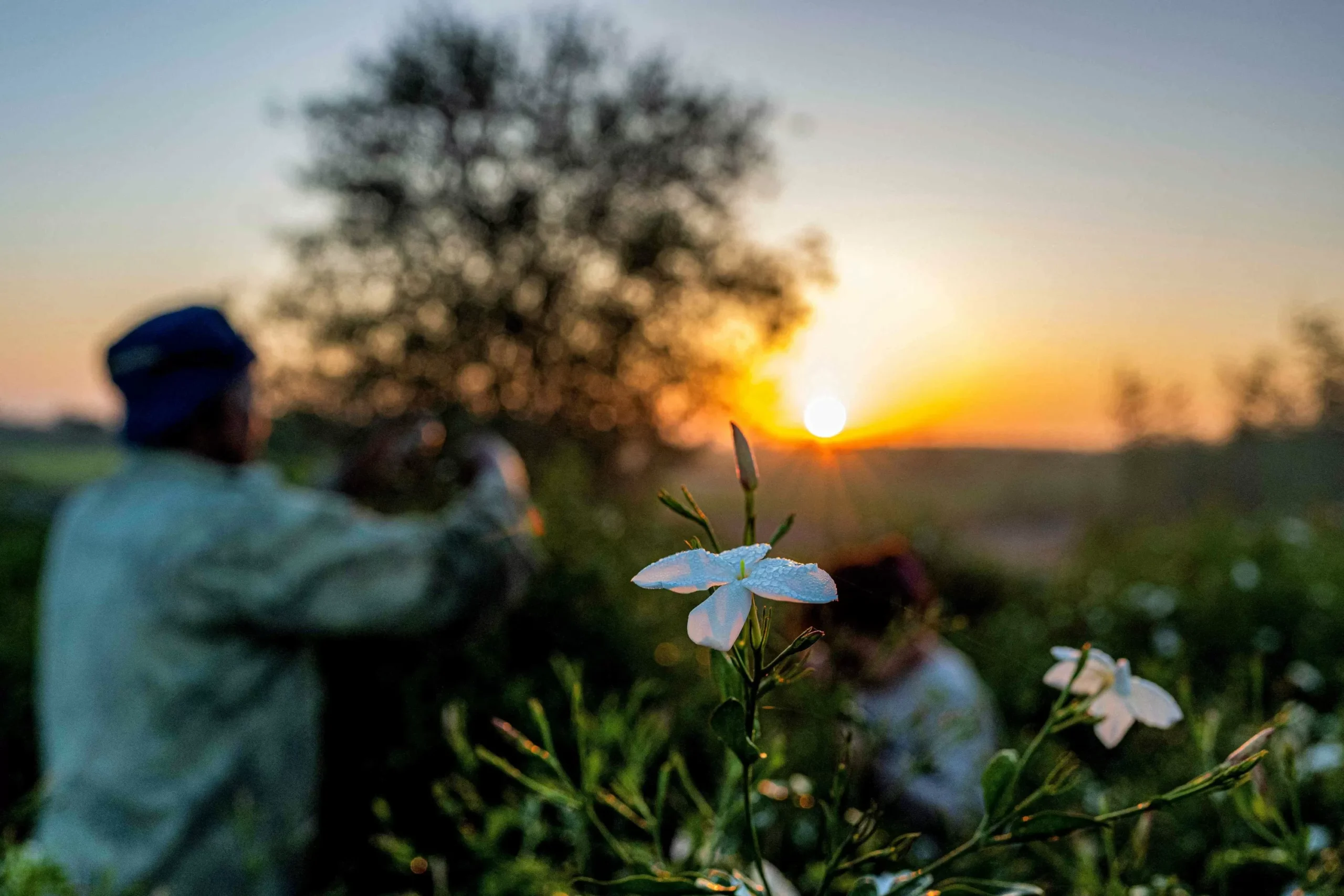
For years, Wael al-Sayed has been a familiar figure in the Nile Delta, quietly picking jasmine blossoms by night. His skilled hands have supplied some of the top global perfume houses with the delicate flowers, prized for their sweet and intoxicating scent. But in recent summers, Wael’s basket has felt lighter, his harvest diminished. The culprit? Climate change.
As temperatures rise and rainfall decreases, the Nile Delta has been facing the harsh effects of climate change. For Wael and other jasmine pickers, this means a significant decrease in the number of blossoms available for harvest. The once abundant fields of jasmine have become sparse, and the future of this ancient trade is in jeopardy.
Wael’s family has been in the jasmine business for generations, and he has been picking flowers since he was a young boy. He knows the fields like the back of his hand and can spot the perfect jasmine blossom from a mile away. But in recent years, he has had to work harder and longer to collect the same amount of flowers. The hot and dry weather has caused the jasmine plants to wither and produce fewer blooms, leaving Wael and his fellow pickers struggling to make ends meet.
The impact of climate change on the jasmine industry is not just limited to the pickers. The global perfume houses that rely on the Nile Delta’s jasmine supply are also feeling the effects. The decrease in jasmine production has led to a rise in prices, making it difficult for these perfume houses to source the necessary amount of jasmine for their products. This has not only affected the perfume industry but also the local economy, as jasmine is a major source of income for many families in the Nile Delta.
Despite these challenges, Wael remains optimistic. He believes that with the right measures, the jasmine industry can adapt and thrive in the face of climate change. He has started experimenting with different irrigation techniques and has seen some success in producing more jasmine blooms. He is also working closely with local scientists and experts to find sustainable solutions that will benefit both the jasmine plants and the environment.
Wael’s efforts have not gone unnoticed. He has become a spokesperson for the jasmine pickers in the Nile Delta, advocating for the protection of their livelihood and the preservation of the jasmine fields. He has also become an ambassador for climate action, using his platform to raise awareness about the impact of climate change on the jasmine industry and the urgent need for action.
The Egyptian government has also taken notice of the situation and has implemented measures to support the jasmine industry. They have provided training and resources to help farmers and pickers adapt to the changing climate. They have also invested in research and development to find sustainable solutions for the jasmine fields.
Thanks to these efforts, the future of the jasmine industry in the Nile Delta is looking brighter. Wael and his fellow pickers are hopeful that with continued support and innovation, they will be able to continue their ancient trade for generations to come. They are determined to not let climate change defeat them and are working hard to ensure that the sweet scent of Egyptian jasmine will continue to enchant the world.
In the face of adversity, Wael al-Sayed and the jasmine pickers of the Nile Delta have shown resilience and determination. They have proven that with passion and perseverance, even the most delicate of flowers can withstand the harshest of climates. And as we continue to face the challenges of climate change, let us be inspired by their story and work together to protect our planet and its precious resources.