

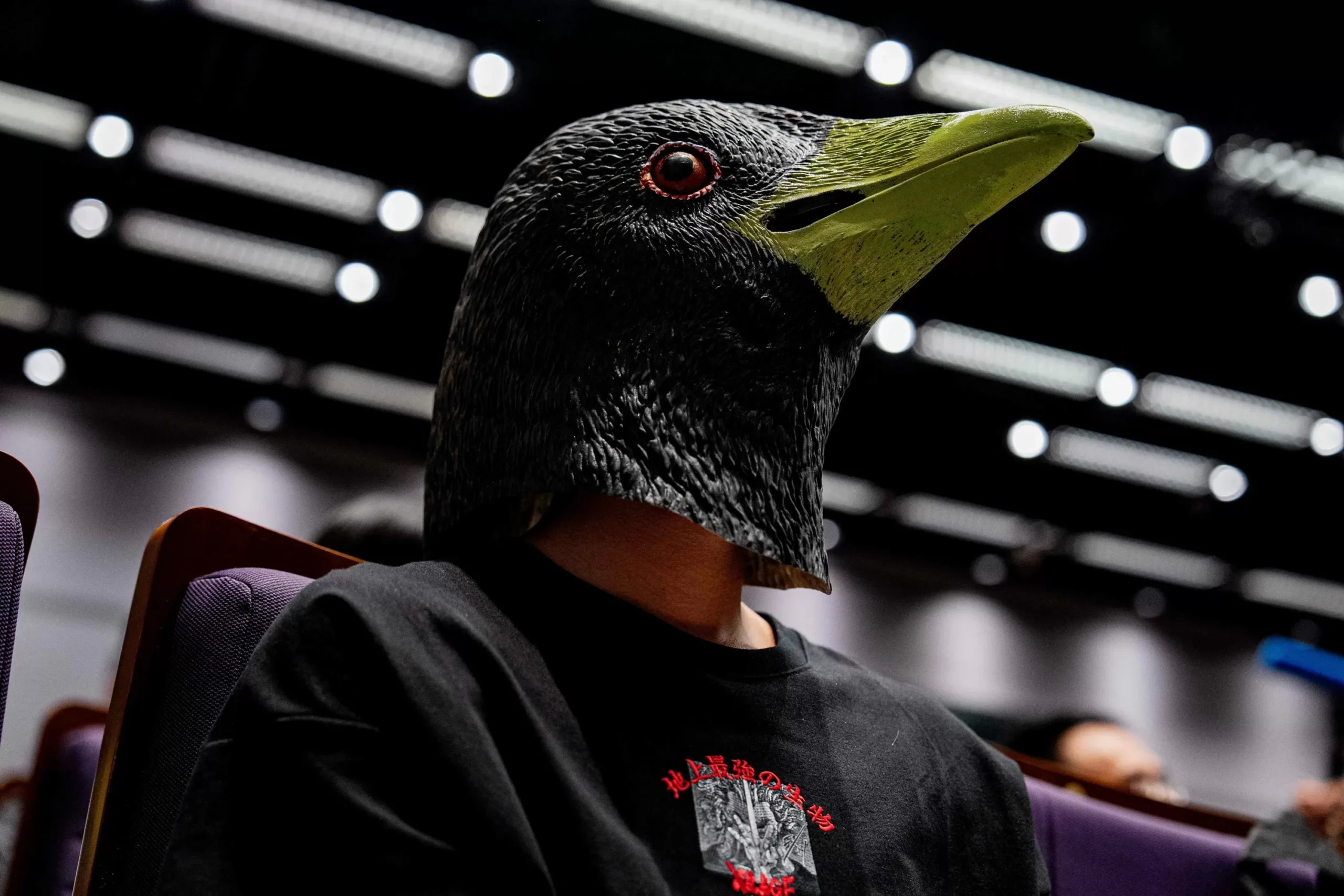
The chirping of birds echoed through a packed lecture hall in Hong Kong, though there wasn’t a feather in sight. The residents, some pressing the sides of their throats or contorting their faces in concentration, were not in fact birds, but rather students eagerly participating in a unique and innovative learning experience.
This unconventional approach to education has been gaining popularity in recent years, as educators and students alike seek new ways to engage and inspire. And it seems that the chirping of birds is just one of the many creative methods being used to achieve this goal.
The lecture hall, which was once a dull and lifeless space, has been transformed into a vibrant and dynamic learning environment. The walls are adorned with colorful murals, the desks are arranged in a circular formation, and the windows are left open to let in the sounds and smells of nature. It’s a far cry from the traditional rows of desks and chalkboard setup that many of us are used to.
But what exactly is the purpose of all this? How does the chirping of birds and other unconventional methods contribute to the learning process? The answer lies in the concept of experiential learning.
Experiential learning is a hands-on approach to education that encourages students to actively participate in their own learning. It’s a departure from the traditional lecture-style teaching, where students are passive recipients of information. Instead, students are encouraged to engage with the material, ask questions, and make connections to their own experiences.
In the lecture hall in Hong Kong, the chirping of birds is just one of the many tools used to facilitate this type of learning. The birds, along with other elements of nature, serve as a metaphor for the students’ own learning journey. Just as the birds must navigate their environment and adapt to changes, students are challenged to do the same in their own learning process.
The use of nature in the classroom has been shown to have a positive impact on students’ well-being and academic performance. Studies have found that exposure to nature can reduce stress, improve concentration, and increase creativity. It’s no wonder then, that the chirping of birds has become a staple in this unique learning environment.
But it’s not just the use of nature that makes this approach to education so effective. The circular arrangement of desks encourages collaboration and discussion among students, while the colorful murals on the walls serve as visual aids to enhance learning. The open windows not only let in the sounds of nature, but also the bustling city outside, providing a real-world context for learning.
As the chirping of birds continues to fill the lecture hall, it’s clear that this unconventional approach to education is making a positive impact on the students. They are actively engaged, asking questions, and making connections to their own lives. The traditional lecture-style teaching may have its place, but it’s clear that experiential learning has a valuable role to play in shaping the minds of our future generations.
So the next time you hear the chirping of birds in an unexpected place, remember that it may just be a sign of a new and exciting approach to education. And who knows, maybe one day we’ll see feathers in the lecture hall too.