

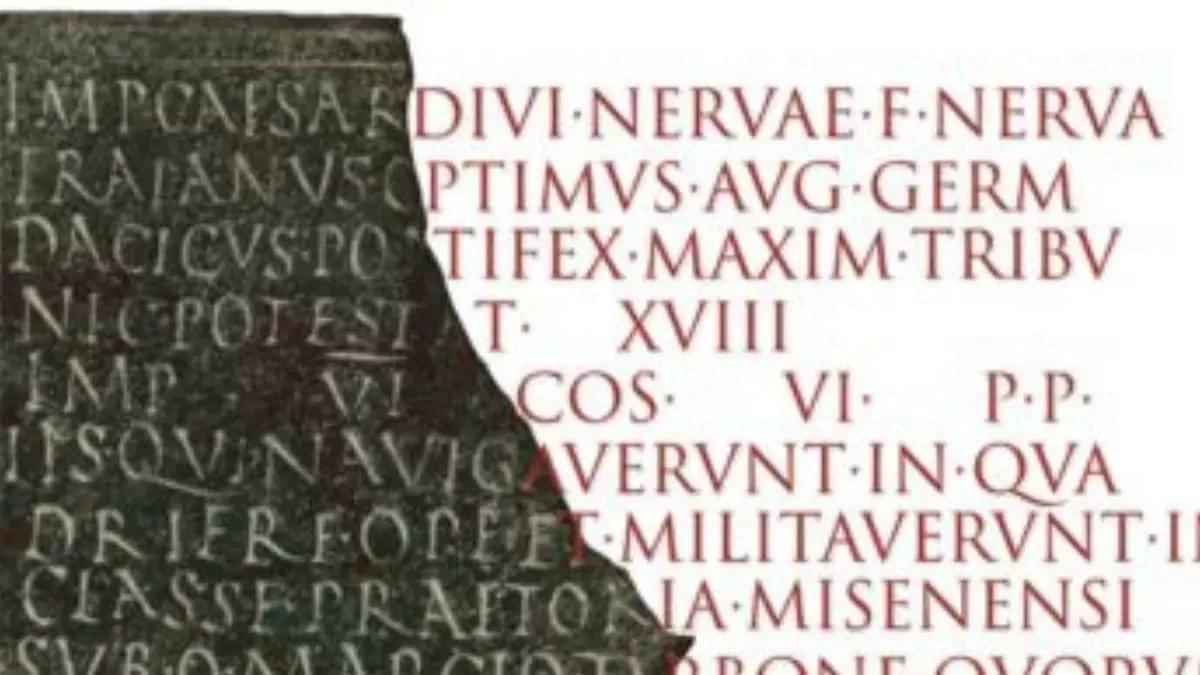
Google DeepMind, the world-renowned artificial intelligence research company, has once again made headlines with its groundbreaking Aeneas model. This revolutionary AI technology has the ability to reconstruct damaged ancient Roman inscriptions with remarkable accuracy, making it a game-changer for historical research.
The Aeneas model, named after the legendary Trojan hero in Virgil’s Aeneid, is a deep learning algorithm that has been trained on a vast collection of ancient Roman inscriptions. These inscriptions, which are often damaged or incomplete, provide valuable insights into the lives and cultures of the people who lived in the Roman Empire. However, deciphering and understanding these inscriptions can be a daunting task for historians and archaeologists.
This is where the Aeneas model comes in. Using advanced machine learning techniques, the model is able to fill in missing text, estimate origins, and connect similar inscriptions, providing a more complete and accurate understanding of the inscriptions. This not only saves time and effort for researchers, but also opens up new possibilities in the study of ancient history.
One of the most impressive features of the Aeneas model is its ability to accurately reconstruct damaged inscriptions. This is achieved through a process called “image inpainting”, where the model uses its knowledge of ancient Roman writing styles to fill in missing parts of the inscription. This not only helps to preserve the inscriptions, but also provides a clearer picture of the text, making it easier for researchers to decipher and interpret.
In addition to reconstructing damaged inscriptions, the Aeneas model also has the ability to estimate the origins of inscriptions. By analyzing the writing style, language, and content of the inscription, the model can determine where it was created and provide valuable insights into the culture and society of that region. This is particularly useful for inscriptions that have been found in different locations, as it can help to piece together the history and movement of ancient civilizations.
But perhaps the most exciting aspect of the Aeneas model is its ability to connect similar inscriptions. This is achieved through a process called “graph-based matching”, where the model compares different inscriptions and identifies similarities and connections between them. This not only helps to create a more complete picture of the ancient world, but also allows researchers to make connections and draw conclusions that were previously impossible.
What sets the Aeneas model apart from other AI technologies is its open-source and free-to-use nature. This means that anyone with an internet connection and a computer can access and use the model for their research. This democratization of AI technology is a game-changer for the field of ancient history, as it allows for a wider range of researchers to access and utilize this powerful tool.
The potential applications of the Aeneas model are endless. It can be used to study a wide range of topics, from the daily lives of ancient Romans to the spread of the Roman Empire. It can also aid in the preservation and restoration of ancient artifacts, providing a more accurate and complete understanding of our past.
The Aeneas model has already been put to the test by researchers at the University of Oxford, who used it to reconstruct a damaged inscription from the ancient city of Pompeii. The results were astounding, with the model accurately filling in missing text and providing valuable insights into the history of the city.
With its ability to reconstruct damaged inscriptions, estimate origins, and connect similar inscriptions, the Aeneas model is truly a game-changer for historical research. Its open-source and free-to-use nature also makes it accessible to a wider audience, opening up new possibilities in the study of ancient history. Thanks to Google DeepMind’s groundbreaking technology, we can look forward to a more complete and accurate understanding of our ancient past.