

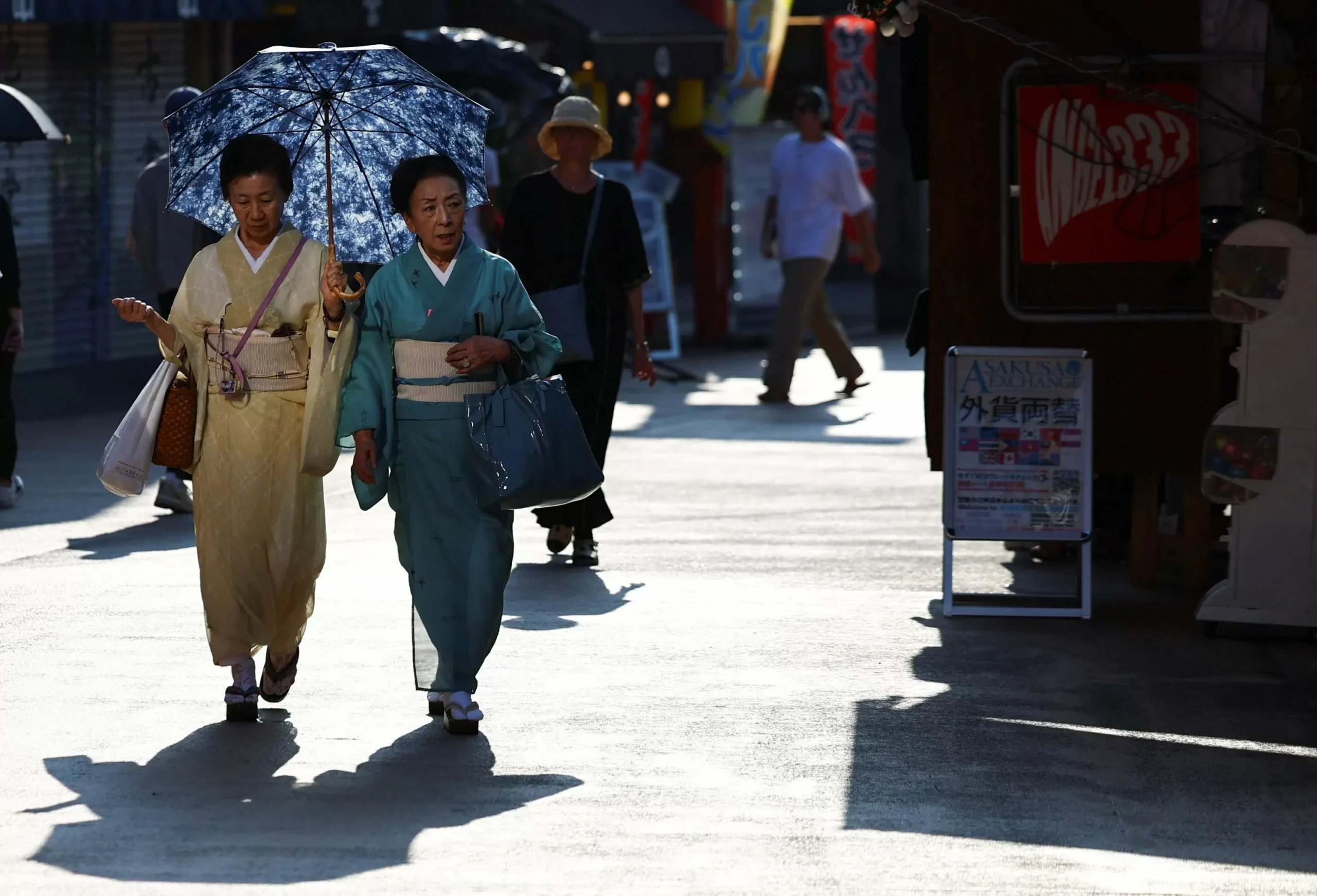
Japan is known for its vibrant culture, technological advancements, and natural beauty. However, in recent years, the country has been facing extreme weather conditions, which have raised concerns about global warming and its impact on the environment. On Tuesday, Japan recorded two new heat records, highlighting the severity of the situation.
According to the Japan Meteorological Agency, the mercury rose to 41.6 degrees Celsius (106.88 degrees Fahrenheit) in Kumagaya, a city located in the Saitama Prefecture. This temperature was the hottest ever recorded in Japan, surpassing the previous record of 41.0 degrees Celsius in August 2013. Just a few hours later, the temperature in Kumagaya climbed to 41.8 degrees Celsius, breaking the previous record and setting a new one.
The scorching heat took a toll on the citizens of Japan, with heatstroke cases rising and hospitals reporting an influx of patients. The extreme heat also caused disruptions in transportation, with trains running at a slower pace and flights being delayed or canceled. The government issued heatstroke warnings and advised people to stay hydrated and avoid going out in the peak hours of the day.
Japan is not the only country facing extreme heatwaves this summer. Europe has been battling with record-breaking temperatures, and the United States has also witnessed its fair share of heatwaves. These incidents reinforce the fact that climate change is a pressing issue that needs immediate attention.
The rise in temperatures in Japan can be attributed to a phenomenon called the “urban heat island effect,” where cities experience higher temperatures than surrounding rural areas due to the concentration of buildings and human activities. This effect is exacerbated by the increase in greenhouse gases, which trap heat and contribute to global warming.
It is crucial for Japan and other countries to take immediate action to combat the effects of climate change. The government of Japan has already launched various initiatives to reduce carbon emissions, such as promoting renewable energy, implementing energy-efficient policies, and setting targets for reducing greenhouse gas emissions. However, there is still a long way to go, and more efforts need to be made to mitigate the impact of global warming.
One positive step taken by Japan is the hosting of the G20 summit earlier this year, where leaders from the world’s top economies gathered to discuss pressing issues, including climate change. At the summit, Japan called for increased cooperation and action to combat global warming and pledged to lead by example in reducing greenhouse gas emissions.
As individuals, we can also do our part in saving the environment. Simple actions like using public transportation, conserving energy, and reducing waste can make a significant impact in the long run.
Despite the alarming heat records, there is still hope. The recent success of the 2015 Paris Climate Agreement, where 196 countries committed to reducing greenhouse gas emissions and limiting the global temperature rise, is a positive step towards a sustainable future. The onus is on all of us to take responsibility and work together to save our planet.
In conclusion, the new heat records set in Japan serve as a reminder of the urgent need to address climate change. As a country, Japan is taking steps in the right direction, but more needs to be done. We, as individuals, also have a role to play in preserving our environment for future generations. Let us all join hands and work towards a sustainable future.