

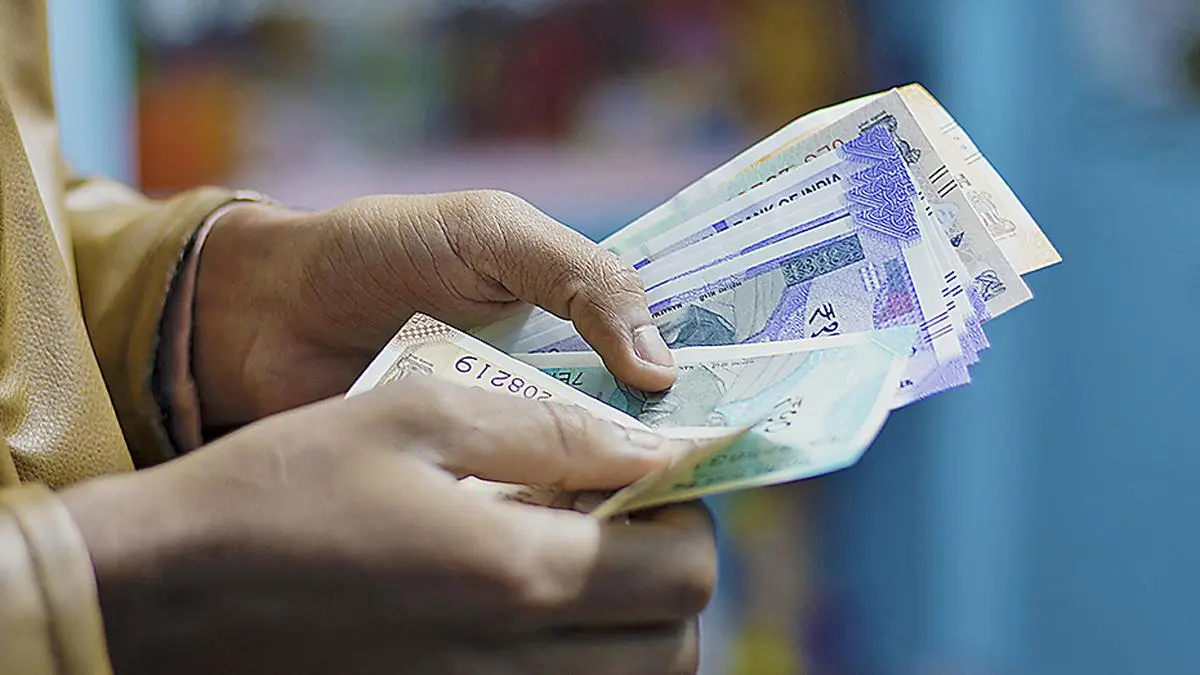
The Indian rupee experienced a significant decline on Wednesday, marking its biggest single-day drop in three months. The currency closed about 61 paise lower, causing concern among investors and the general public. This sudden drop has raised questions about the stability of the rupee and its impact on the economy.
The rupee, which has been on a steady rise in recent months, took a sharp turn on Wednesday as it closed at 73.87 against the US dollar. This decline can be attributed to several factors, including the strengthening of the US dollar, rising crude oil prices, and the ongoing trade tensions between the US and China.
The US dollar has been gaining strength against major currencies, including the Indian rupee, due to the Federal Reserve’s decision to increase interest rates. This has made the dollar more attractive to investors, resulting in a decrease in demand for other currencies. As a result, the rupee has been under pressure and has seen a decline in its value.
Another factor contributing to the rupee’s drop is the increase in crude oil prices. India, being a major importer of oil, is heavily dependent on the global market for its oil needs. The recent rise in crude oil prices has put pressure on the country’s import bill, causing a strain on the rupee’s value. This has also led to a rise in inflation, which can have a ripple effect on the overall economy.
The ongoing trade tensions between the US and China have also played a role in the rupee’s decline. The two economic giants have been engaged in a trade war, imposing tariffs on each other’s goods. This has caused uncertainty in the global market, leading to a decrease in investor confidence and a shift towards safer currencies like the US dollar.
While the rupee’s drop may cause concern, it is important to note that this is not an isolated incident. Currency fluctuations are a common occurrence in the global market, and the rupee has shown resilience in the face of such challenges in the past. The Reserve Bank of India (RBI) has also been taking measures to stabilize the currency and maintain its value.
Moreover, the decline in the rupee can also have some positive effects on the economy. A weaker rupee can make Indian exports more competitive in the global market, boosting the country’s export sector. This can also help in reducing the trade deficit and strengthening the economy in the long run.
The government has also taken steps to address the issue and has assured that the rupee’s decline is temporary. Finance Minister Nirmala Sitharaman has stated that the government is closely monitoring the situation and is ready to take necessary measures to stabilize the currency.
It is also important to note that the rupee’s decline is not a reflection of the country’s economic growth. India’s GDP growth rate has been consistently strong, and the country is expected to continue its growth trajectory in the coming years. The recent drop in the rupee is a result of external factors and does not reflect the country’s economic fundamentals.
In conclusion, while the rupee’s drop may cause concern, it is important to maintain a positive outlook and trust in the resilience of the Indian economy. The government and the RBI are taking necessary measures to stabilize the currency, and the country’s economic growth remains strong. As a nation, we must continue to work towards strengthening our economy and maintaining a stable currency in the global market.