

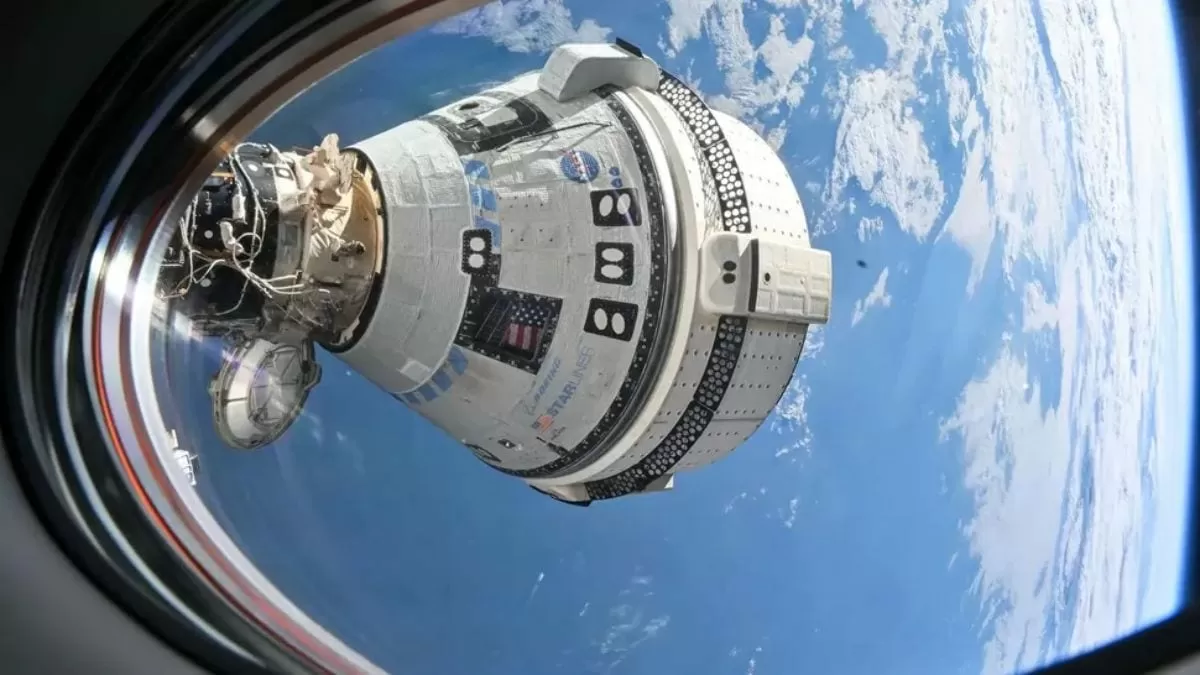
NASA has been at the forefront of space exploration for decades, constantly pushing the boundaries of what is possible. However, even with their expertise and advanced technology, they still face challenges and setbacks. The recent grounding of Boeing’s CST-100 Starliner is a prime example of this.
In June 2024, NASA planned to conduct a crewed test flight of the Starliner, a spacecraft designed to ferry astronauts to and from the International Space Station (ISS). The mission was highly anticipated, as it marked a significant step towards NASA’s goal of sending humans to Mars.
However, things did not go as planned. During the test flight, critical malfunctions occurred, including multiple thruster failures and helium pressurization leaks. As a result, NASA made the difficult decision to cut the mission short and bring the Starliner back to Earth empty. This also meant leaving the astronauts on the ISS for safety reasons.
The news of the Starliner’s malfunction was met with disappointment and concern, but NASA and Boeing immediately went into action to address the issues. Engineers worked tirelessly to understand the root cause of the problems and come up with solutions to prevent them from happening again.
After a thorough investigation, it was determined that the malfunctions were caused by thermal protection system issues. This system is responsible for protecting the spacecraft from the extreme temperatures of reentry into Earth’s atmosphere. It was a complex problem that required precise and detailed solutions.
In light of these findings, NASA has announced that the Starliner will be grounded until at least 2026. While this may seem like a setback, it is actually a necessary step to ensure the safety and success of future missions. NASA’s top priority is always the safety of their astronauts, and they will not compromise on that.
With the grounding of the Starliner, NASA and Boeing have the time and resources to thoroughly address and fix the issues. This will not only ensure the safety of future missions but also improve the overall performance of the spacecraft. In the long run, this will benefit not just NASA, but also the entire space industry as it strives towards more advanced and ambitious missions.
This is not the first time NASA has faced setbacks in their space exploration journey, and it certainly won’t be the last. However, it is important to remember that these challenges are a crucial part of the learning process. Each setback brings valuable lessons that can be applied to future missions and make them even more successful.
NASA has always been committed to pushing the boundaries of human knowledge and exploration. They have achieved incredible feats and will continue to do so in the future. The grounding of the Starliner is just a temporary pause in their journey towards the stars.
In the meantime, NASA will continue to work on other projects and missions, including the Artemis program, which aims to send the first woman and next man to the Moon by 2024. This ambitious goal requires the collaboration and dedication of all their partners, including Boeing.
The setbacks faced by the Starliner will only make NASA and Boeing stronger and more determined to achieve their goals. As NASA Administrator Bill Nelson said, “We’re going to get this right. That’s what NASA does. We correct the issues, and we move on.”
So while it may be disappointing to see the Starliner grounded for the next few years, it is important to remember that this is a small pause in the grand scheme of things. NASA and Boeing are committed to ensuring the safety and success of all their missions, and we can only expect greater things from them in the future.