

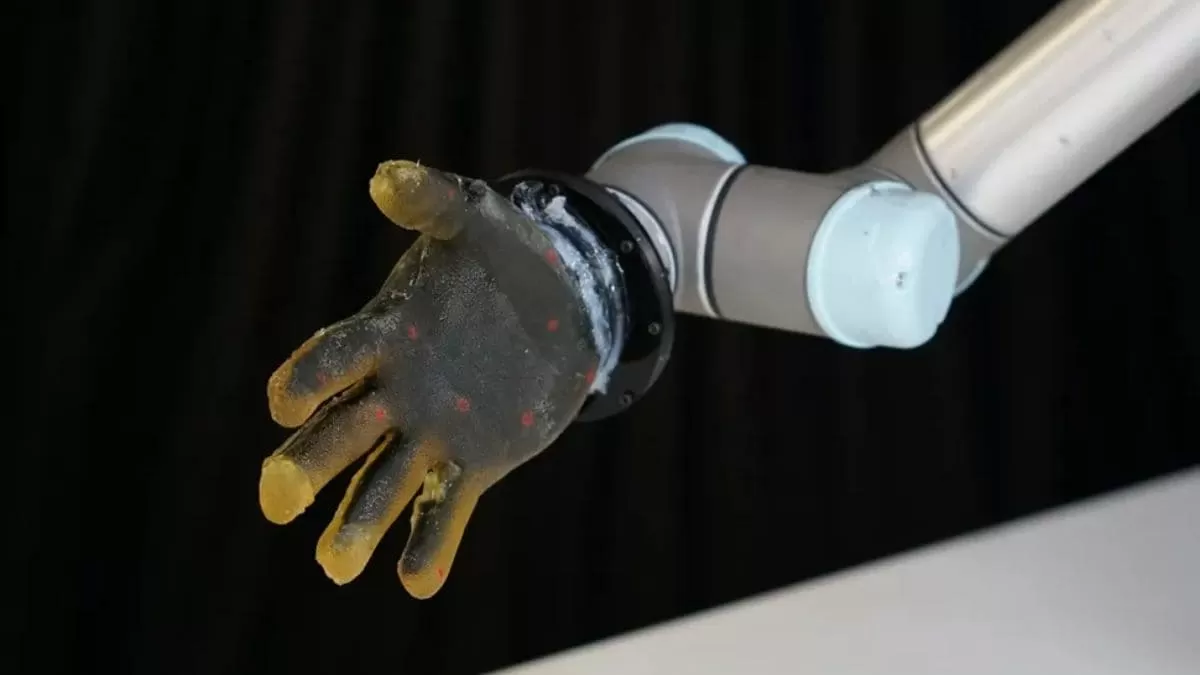
Scientists have achieved a major breakthrough in the field of robotics with the creation of a gelatin-based robotic skin that can sense touch, heat, and even physical damage. This groundbreaking invention has been developed by a team of researchers led by Dr. Thomas George Thuruthel from University College London.
The skin, which is made up of a single conductive layer embedded with electrodes, has the ability to detect and classify various stimuli. This includes pokes, burns, and cuts, making it a significant advancement in the field of robotics.
The idea of creating a robotic skin that can mimic the human sense of touch and pain has long been a goal for scientists. However, previous attempts have fallen short due to the complexity and sensitivity of the human skin. But with this new gelatin-based skin, the team has overcome these challenges and has successfully created a highly sensitive and versatile robotic skin.
One of the key features of this skin is its ability to sense heat. This is achieved through the use of a conductive layer that can detect changes in temperature. This feature opens up a world of possibilities for robots to perform tasks that require sensitivity to heat, such as cooking or handling hot objects.
But what truly sets this robotic skin apart is its ability to sense physical damage like cuts or burns. This is made possible by the incorporation of electrodes that can detect changes in pressure and electrical resistance. This means that the skin can not only sense when it has been damaged, but also classify the type of damage it has sustained.
The team tested the skin by subjecting it to various stimuli, including pokes, burns, and cuts. The results were impressive, with the skin being able to accurately detect and classify each type of stimulus. This is a significant achievement as it demonstrates the skin’s ability to mimic the human body’s response to different types of damage.
The potential applications for this gelatin-based robotic skin are vast. It can be used in the field of prosthetics, where it can provide a more natural and sensitive touch for amputees. It can also be incorporated into surgical robots, allowing for more precise and delicate procedures. Additionally, it can be used in hazardous environments where human presence is not feasible, such as space exploration or deep-sea missions.
The use of gelatin as the main material for this skin is also noteworthy. Gelatin is biocompatible, meaning it is safe to use on humans and other living organisms. This makes the skin suitable for medical applications and reduces the risk of rejection or adverse reactions.
The team behind this groundbreaking invention is hopeful that this skin will revolutionize the field of robotics and open up new possibilities for human-robot interaction. They believe that this skin has the potential to bring robots closer to humans in terms of sensitivity and response to external stimuli.
Dr. Thuruthel, the lead researcher, expressed his excitement for the future of this technology, stating, “This gelatin-based robotic skin is just the beginning. We believe that with further development and advancements, this skin can be integrated into a wide range of robotic systems, making them more human-like and versatile.”
The creation of this gelatin-based robotic skin is a testament to the power of scientific innovation and collaboration. It is a significant step towards creating more advanced and human-like robots that can assist us in various tasks and enhance our lives.
In conclusion, the gelatin-based robotic skin developed by Dr. Thomas George Thuruthel and his team at University College London is a remarkable achievement in the field of robotics. Its ability to sense touch, heat, and physical damage sets it apart from previous attempts and opens up a world of possibilities for its use. With further advancements, this skin has the potential to revolutionize the field of robotics and bring us closer to a future where robots and humans can coexist and work together seamlessly.