

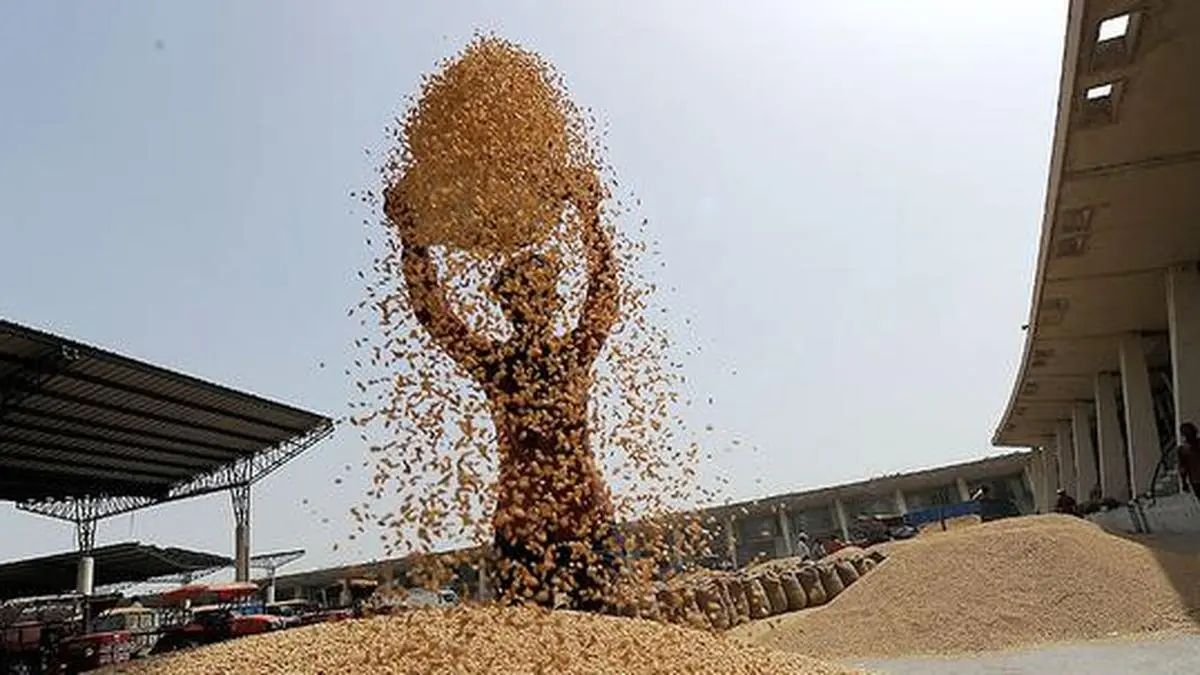
The arrival of the Rabi season brings good news for the farmers as the prices of Mandi (market) crops are near the Minimum Support Price (MSP). The latest reports from various Mandis across the country show that wheat and barley prices are above the benchmark rates, while chana and mustard prices are slightly below. This is a positive sign for the farmers who have been struggling with low crop prices in the past.
The MSP is the minimum price at which the government buys crops from the farmers. It is announced by the government every year to ensure that the farmers get a fair price for their produce. This year, the MSP for wheat and barley has been increased by 2.6% and 7.7% respectively, while the MSP for chana and mustard has been increased by 4.6% and 8.6% respectively. This increase in MSP has played a significant role in boosting the prices of these crops in the Mandis.
Wheat and barley, being the main Rabi crops, have seen a sharp rise in prices in the Mandis. In the last few weeks, the prices of wheat have increased by 10% to 15% in various Mandis, while the prices of barley have increased by 20% to 25%. This rise in prices can be attributed to the high demand for these crops in the market. With the increase in MSP, the government is expected to procure more wheat and barley from the farmers, which has led to a surge in prices.
On the other hand, chana and mustard prices have not seen a significant rise in the Mandis. The prices of chana have remained stable, while the prices of mustard have slightly decreased. However, these prices are still above the MSP, which is a positive sign for the farmers. The demand for chana and mustard in the market is not as high as wheat and barley, but with the increase in MSP, farmers are expected to get a fair price for their produce.
The increase in MSP has also encouraged farmers to plant more of these crops, which has led to an increase in the overall production. This increase in production will not only fulfill the domestic demand but will also help in boosting the export of these crops. This will not only benefit the farmers but also contribute to the country’s economy.
The government has also taken various steps to ensure that the farmers get the MSP for their crops. The procurement process has been made smoother, and the government has also increased the number of procurement centers in different states. This has enabled the farmers to sell their produce at the MSP without any hassle.
The rise in prices of Rabi crops near the MSP is a positive sign for the farmers, who have been facing the brunt of low crop prices for a long time. This will not only provide them with a fair price for their produce but will also boost their confidence in agriculture as a profitable profession. The increase in MSP and the government’s efforts to ensure the procurement of crops at MSP have given a much-needed relief to the farmers.
It is also important to note that the increase in MSP is a step towards fulfilling the government’s promise of doubling the income of farmers by 2022. This increase in MSP will not only benefit the farmers but also contribute to the overall growth of the agricultural sector. It will also encourage more farmers to switch to Rabi crops, which will lead to a diversification of crops and reduce the risk of depending on a single crop.
In conclusion, the increase in MSP has brought good news for the farmers as the prices of Rabi crops in the Mandis are near the benchmark rates. This has been made possible due to the government’s efforts to ensure the procurement of crops at MSP and the increase in demand for these crops in the market. This rise in prices will not only benefit the farmers but also contribute to the overall growth of the agricultural sector. Let us hope that this trend continues in the future and the farmers continue to get a fair price for their hard work.