

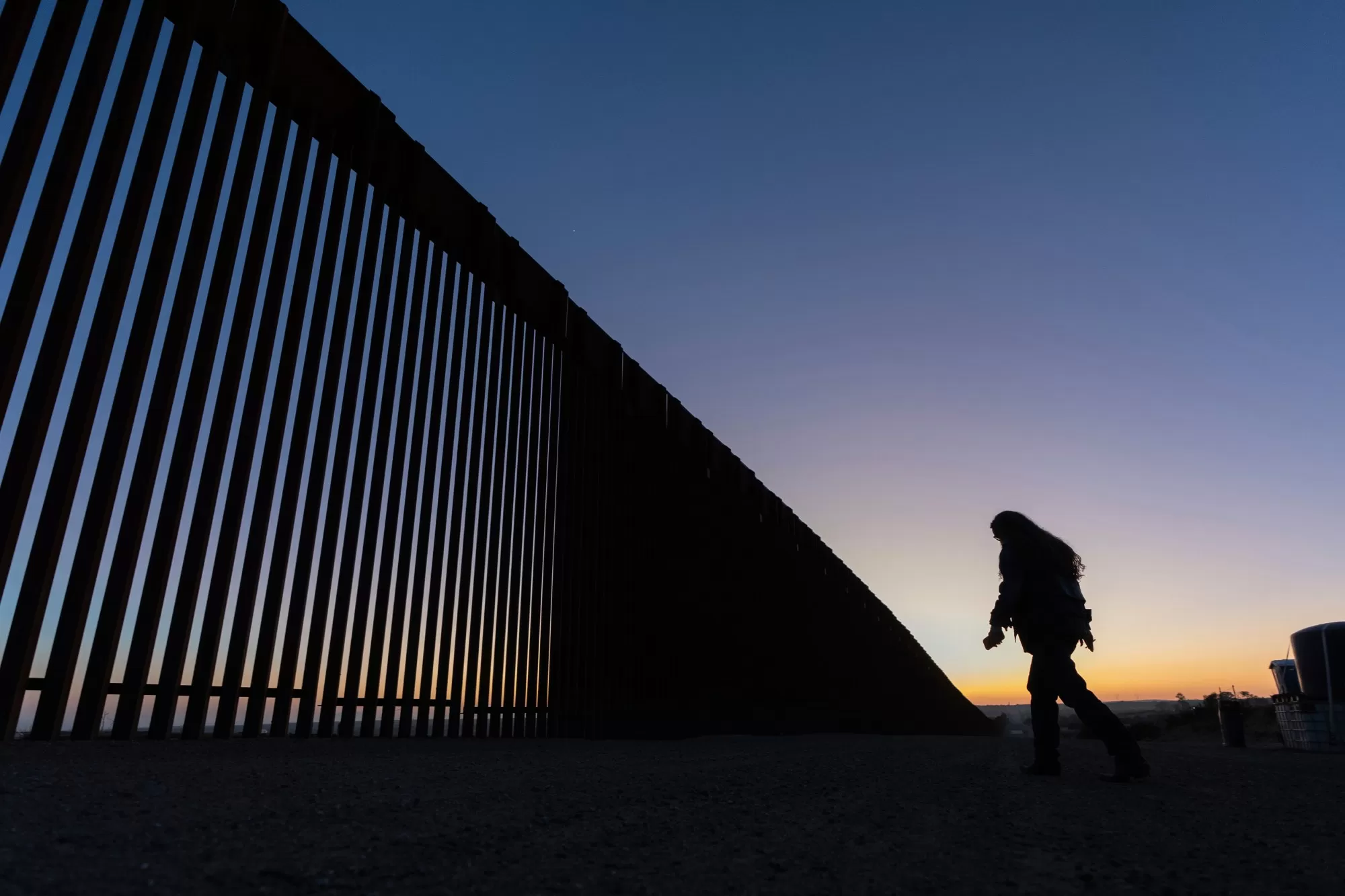
The United States has been grappling with a significant influx of migrants at its southern border, leading to various measures and policies being implemented by the government to control the situation. One of the key pillars of the current administration’s plan to crack down on migration has been to build a wall along the border. However, recent events have thrown this plan into doubt, raising questions about the effectiveness and feasibility of such a strategy.
The idea of a border wall has been a contentious issue since the beginning, with concerns being raised about its practicality and cost. Nonetheless, it has been one of the central promises of President Trump’s campaign, with the assertion that it would deter illegal immigration and protect national security.
However, a recent report by the Government Accountability Office (GAO) has raised serious doubts about the effectiveness of the wall as a solution to the crisis at the southern border. The report, requested by Democratic lawmakers, found that the Department of Homeland Security (DHS) has not assessed the cost and effectiveness of the wall accurately. It also stated that the DHS has not provided a complete analysis of the threats facing the border and how the wall would address them.
This revelation comes as a significant blow to the Trump administration, as the report undermines the very premise of the wall’s construction. It throws into doubt the entire strategy of using a physical barrier to secure the border and curb illegal immigration. The GAO report highlights the need for a more comprehensive and evidence-based approach to addressing the issue of migration at the southern border.
The report’s findings also bring to light the lack of transparency and accountability in the administration’s decision-making process. The fact that the DHS did not accurately assess the cost and effectiveness of the wall before embarking on its construction raises questions about the government’s priorities and whether it is truly committed to finding a viable solution to the issue of illegal immigration.
Moreover, the report casts a shadow of doubt on the president’s repeated claims that Mexico would pay for the wall. As the GAO report points out, the DHS has used funds originally allocated for other purposes, such as disaster relief and military construction, to finance the wall’s construction. It brings into question the fairness and legality of diverting funds meant for other pressing needs towards the wall.
The GAO report has also sparked concerns about the environmental impact of the wall and the potential damage it could cause to the delicate ecosystem in the border region. This issue has been raised by various environmental groups and has now been brought to the forefront by the GAO’s findings. It once again highlights the need for a more thoughtful and thorough approach to finding a solution to the problem of illegal immigration.
The report’s findings have significant implications for the future of the wall and the government’s approach to addressing the migration issue at the southern border. It calls into question the very foundation of the wall as a solution and points towards the need for a more holistic and evidence-based approach.
However, the GAO report should not be seen as a defeat, but rather as an opportunity for the government to reassess its strategy and find more effective and sustainable solutions to the issue of illegal immigration. It is time for the Trump administration to move away from divisive and controversial measures and instead focus on finding practical and long-term solutions that address the root causes of the migration crisis.
The GAO report serves as a timely reminder that addressing complex issues such as illegal immigration requires a thorough and well-informed approach. It is essential to consider all aspects of the problem, including costs, effectiveness, and potential consequences. The report also highlights the need for transparency and accountability in the government’s decision-making process, ensuring that taxpayer funds are used responsibly and for the benefit of all citizens.
In conclusion, the GAO report has raised serious doubts about the effectiveness of the southern border wall as a solution to the issue of illegal immigration. It has brought to light the need for a more comprehensive and evidence-based approach to address the problem. The report should serve as a wake-up call for the government to re-evaluate its strategy and find more sustainable solutions to the complex issue of migration at the southern border. It is time for the government to listen to the concerns raised by the GAO and work towards finding a more inclusive and effective way forward.