

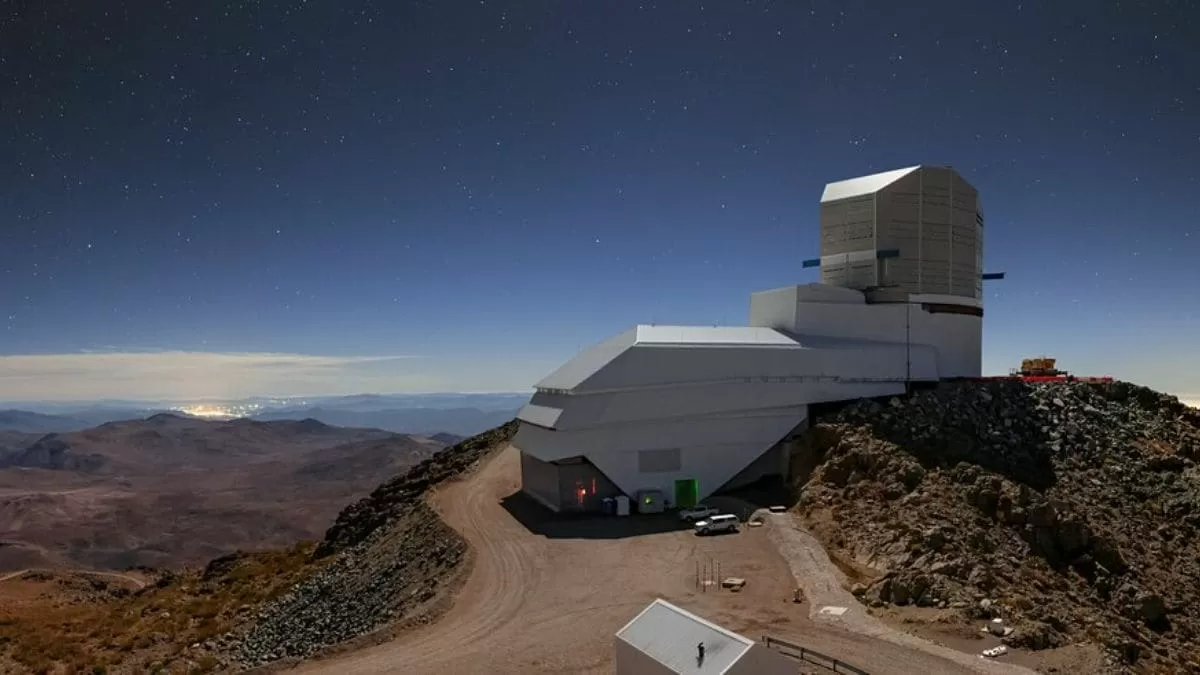
The Vera C. Rubin Observatory, formerly known as the Large Synoptic Survey Telescope (LSST), is set to unveil its first images on June 23rd through a global livestream. This highly anticipated event marks a major milestone in the observatory’s mission to explore dark matter and dynamic cosmic phenomena. With the use of a groundbreaking 3,200-megapixel camera, the images captured by the observatory will provide a never-before-seen view of the universe.
The Vera C. Rubin Observatory, located in the mountains of Chile, is named after the renowned astronomer Vera Cooper Rubin, who made groundbreaking discoveries in the field of dark matter. The observatory’s mission is to conduct a comprehensive survey of the southern sky over the course of a decade, providing a wealth of data for scientists to study and analyze.
The LSST survey will use its powerful camera to capture images of the night sky with unprecedented detail and depth. The camera, which is the size of a small car, is equipped with 189 individual sensors, making it the largest digital camera ever built for astronomical purposes. It has the ability to capture an area of the sky 40 times the size of the full moon in a single shot, allowing for a vast amount of data to be collected.
The images captured by the Vera C. Rubin Observatory will not only be visually stunning, but they will also provide valuable insights into the mysteries of the universe. One of the main objectives of the observatory is to study dark matter, a mysterious substance that makes up about 85% of the universe’s total mass. By observing the effects of dark matter on the motion of galaxies and other celestial bodies, scientists hope to gain a better understanding of its properties and role in the universe.
In addition to studying dark matter, the LSST survey will also provide valuable data on a wide range of cosmic phenomena, including supernovae, asteroids, and black holes. The observatory’s powerful camera will be able to capture these events in real-time, providing scientists with a wealth of information to study and analyze.
The unveiling of the first images from the Vera C. Rubin Observatory is a highly anticipated event in the scientific community. It represents years of hard work and dedication from a team of scientists, engineers, and technicians who have worked tirelessly to bring this project to fruition. The global livestream of the event will allow people from all over the world to witness this historic moment and gain a deeper understanding of the universe we live in.
The LSST survey is expected to transform our view of the universe and provide groundbreaking insights into the mysteries of the cosmos. The data collected by the observatory will be made available to scientists and researchers around the world, allowing for collaboration and further discoveries. This will undoubtedly lead to new and exciting breakthroughs in the field of astronomy.
The Vera C. Rubin Observatory is a testament to human curiosity and our desire to understand the world around us. Its mission to explore dark matter and dynamic cosmic phenomena is a bold and ambitious one, and the unveiling of its first images is just the beginning. As the survey continues over the next decade, we can expect to see even more groundbreaking discoveries and a deeper understanding of the universe we call home.
In conclusion, the Vera C. Rubin Observatory’s first images, captured using a groundbreaking 3,200-megapixel camera, will be unveiled on June 23rd through a global livestream. This event marks a major milestone in the observatory’s mission to explore dark matter and dynamic cosmic phenomena. The LSST survey will transform our view of the universe and provide valuable insights into the mysteries of the cosmos. This is an exciting time for the world of astronomy, and we can’t wait to see what the Vera C. Rubin Observatory will reveal to us in the years to come.