

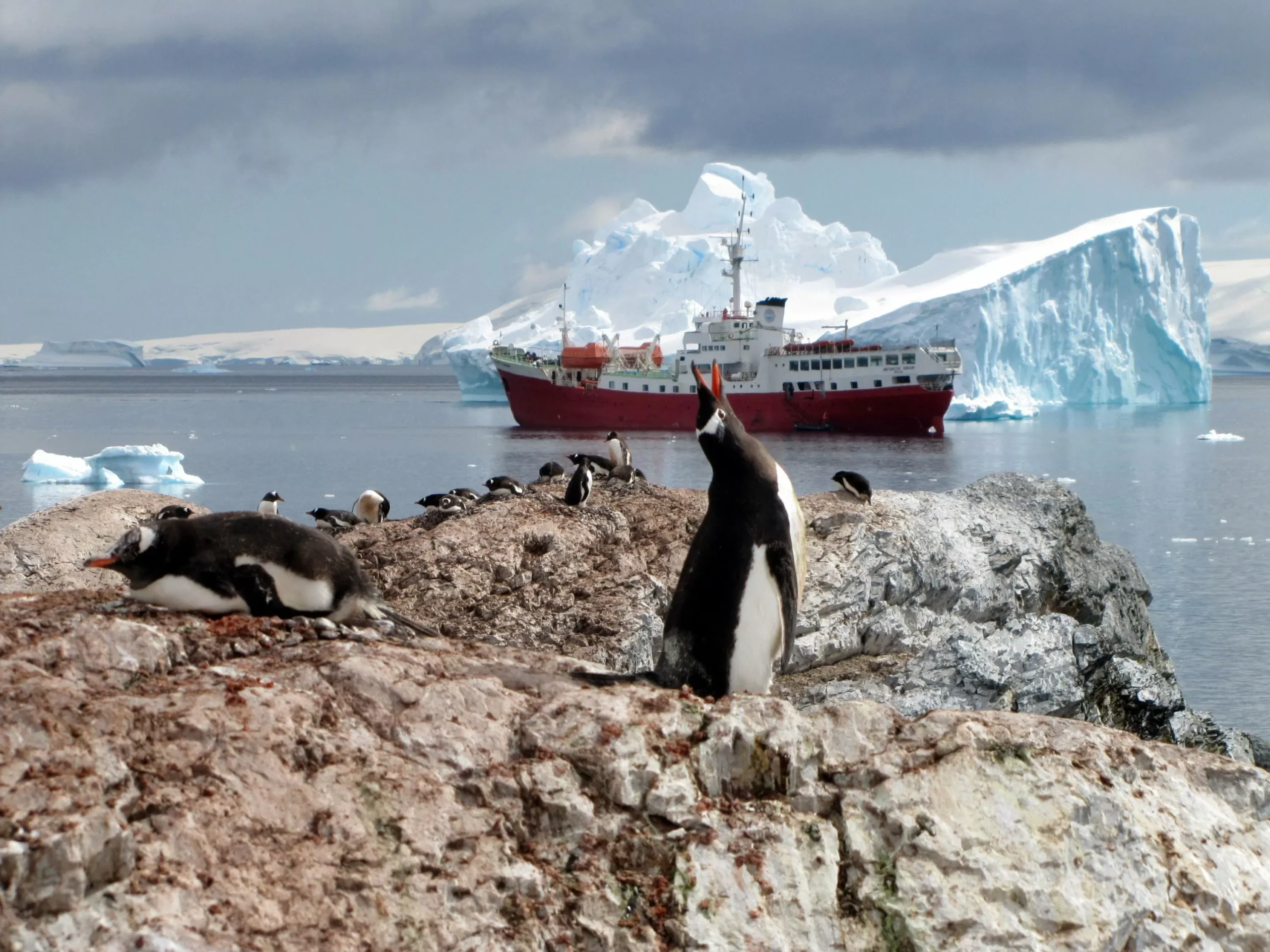
Emperor penguins, the majestic creatures of Antarctica, are facing a grave threat due to global warming. According to a recent study, their populations have shrunk by almost a quarter as their icy habitat is transforming at an alarming rate. This is a cause for concern not only for the penguins but also for the entire ecosystem of Antarctica.
The study, published on Tuesday, revealed that the population of emperor penguins has declined by 24% over the past 50 years. This decline is directly linked to the loss of sea ice, which is the primary breeding ground for these magnificent birds. As the ice melts, it becomes increasingly difficult for the penguins to find suitable breeding sites, leading to a decline in their numbers.
Emperor penguins are the largest of all penguin species and are known for their resilience in the harsh conditions of Antarctica. They have a unique breeding cycle, where they gather in large colonies on the sea ice during the winter months to breed and raise their young. However, with the rapid melting of sea ice, their breeding grounds are disappearing, leaving them with limited options to continue their life cycle.
The study also pointed out that the decline in emperor penguin populations is not uniform across Antarctica. The western Antarctic Peninsula has seen the most significant decline, with a staggering 59% decrease in the number of breeding pairs. This is due to the fact that this region is the fastest-warming area in the world, with temperatures rising at a rate three times faster than the global average.
The loss of sea ice is not only affecting the breeding grounds of emperor penguins but also their food supply. These birds primarily feed on krill, a small shrimp-like crustacean that lives under the sea ice. As the ice melts, the krill population is also declining, making it difficult for the penguins to find food. This is not only a threat to the penguins but also to other marine species that rely on krill for survival.
The decline in emperor penguin populations is a wake-up call for all of us. It is a clear indication that our planet is facing a crisis, and we need to take immediate action to address it. The study also highlighted the urgent need to reduce our carbon footprint and mitigate the effects of global warming. If we continue on this path, not only will the emperor penguins disappear, but the entire ecosystem of Antarctica will be at risk.
However, there is still hope. The study also showed that some emperor penguin colonies are thriving, despite the changing climate. These colonies are located in areas where sea ice is more stable, such as the Ross Sea and East Antarctica. This gives us a glimmer of hope that with the right conservation efforts, we can save these magnificent birds from extinction.
The good news is that there are already efforts in place to protect emperor penguins and their habitat. The Commission for the Conservation of Antarctic Marine Living Resources (CCAMLR) has designated several marine protected areas in Antarctica to safeguard the penguins’ breeding grounds and food sources. These efforts need to be strengthened and expanded to ensure the long-term survival of emperor penguins.
Moreover, as individuals, we can also make a difference. We can reduce our carbon footprint by making small changes in our daily lives, such as using public transportation, conserving energy, and supporting sustainable practices. We can also support organizations and initiatives that work towards protecting the environment and its inhabitants.
In conclusion, the decline in emperor penguin populations is a stark reminder that we need to take immediate action to combat global warming. These magnificent birds are not just a symbol of Antarctica, but also a crucial part of its delicate ecosystem. It is our responsibility to ensure that they continue to thrive in their natural habitat. Let us all join hands and work towards a sustainable future for our planet and its inhabitants.