

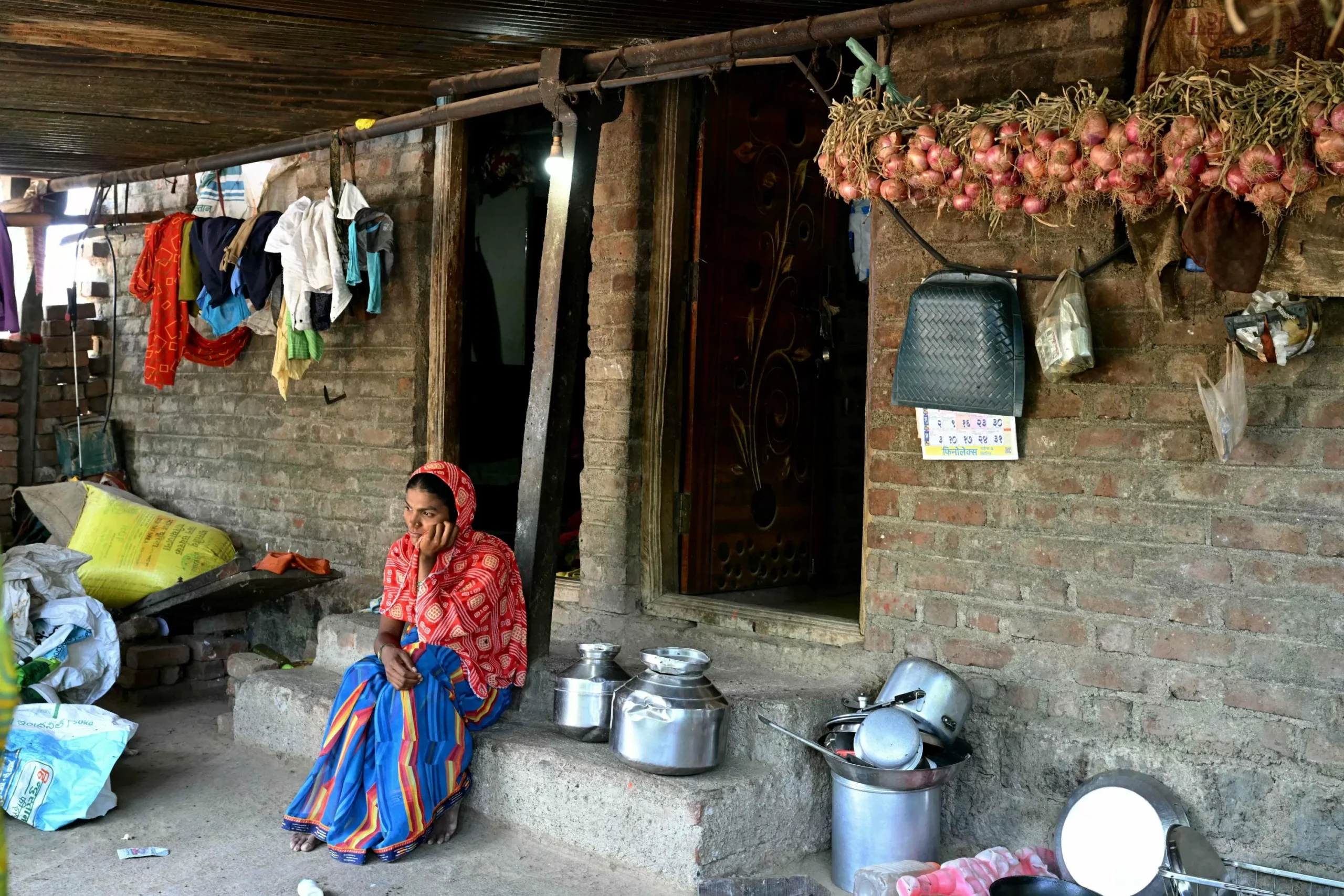
On a small farm in India’s Maharashtra state, Mirabai Khindkar has experienced the harsh realities of farming in a drought-stricken land. After years of struggling to make ends meet, her crops failed and her husband took his own life, leaving her alone to bear the burden of debt and grief. But despite these hardships, Mirabai remains a beacon of hope and resilience, determined to overcome the challenges and rebuild her life.
Farming has always been a way of life for Mirabai and her family. Growing up in a rural village, she learned the art of cultivating the land from her parents. As she married and started her own family, she and her husband worked tirelessly on their small farm to provide for their three children. But despite their hard work, they were never able to escape the looming shadow of debt.
For years, Mirabai and her husband battled the unpredictable weather and ever-increasing costs of farming. But in recent times, the drought has taken a toll on their land, leaving it barren and unyielding. With no crops to sell, they struggled to repay their loans and put food on the table. It was a constant struggle, and the weight of their financial burden became too heavy to bear.
In the midst of this turmoil, Mirabai’s husband succumbed to deep despair and took his own life. Left alone with her children and a mountain of debt, Mirabai could have easily given up. But she refused to be defeated. Instead, she rolled up her sleeves and got to work, determined to turn her fortunes around.
With the help of a local NGO, Mirabai received training on sustainable farming techniques and was provided with low-interest loans to start again. She also received emotional support to cope with her loss and find the strength to carry on. Armed with this newfound knowledge and support, she set out to revive her farm and her life.
Mirabai implemented new methods like drip irrigation and crop rotation to conserve water and improve soil health. She also diversified her crops, growing vegetables and fruits in addition to her traditional crops. It was a risky move, but one that paid off. As her farm flourished, she was able to sell her produce directly to consumers, cutting out the middlemen and earning a better income.
But Mirabai’s journey has not been without its challenges. As a widow in a deeply traditional society, she faced discrimination and social isolation. But she refused to let that stop her. She joined a self-help group for women in her village, where she found a supportive community and a platform to share her experiences and learn from others.
Today, Mirabai’s farm is thriving, and she is free from the heavy burden of debt. She has also become a role model for other struggling farmers in her community. She regularly shares her knowledge and experiences with others, inspiring them to adopt more sustainable farming practices and seek out help when needed.
Despite the hardships she has faced, Mirabai remains positive and hopeful about the future. She dreams of expanding her farm and providing a better life for her children. She also hopes to use her knowledge and experience to help other farmers in similar situations and bring about positive change in her community.
Mirabai’s story is a testament to the resilience and determination of the human spirit. Despite facing unimaginable loss and hardship, she refused to give up and found the strength to rebuild her life. She is a shining example of how with the right support and determination, anything is possible.
As we reflect on Mirabai’s story, let us remember that there are countless farmers like her who are facing similar struggles. It is up to us to support and uplift them, not only in times of crisis but also in creating a more sustainable and equitable future for all. Let us also learn from Mirabai’s courage and determination, and face our own challenges with the same unwavering spirit.