

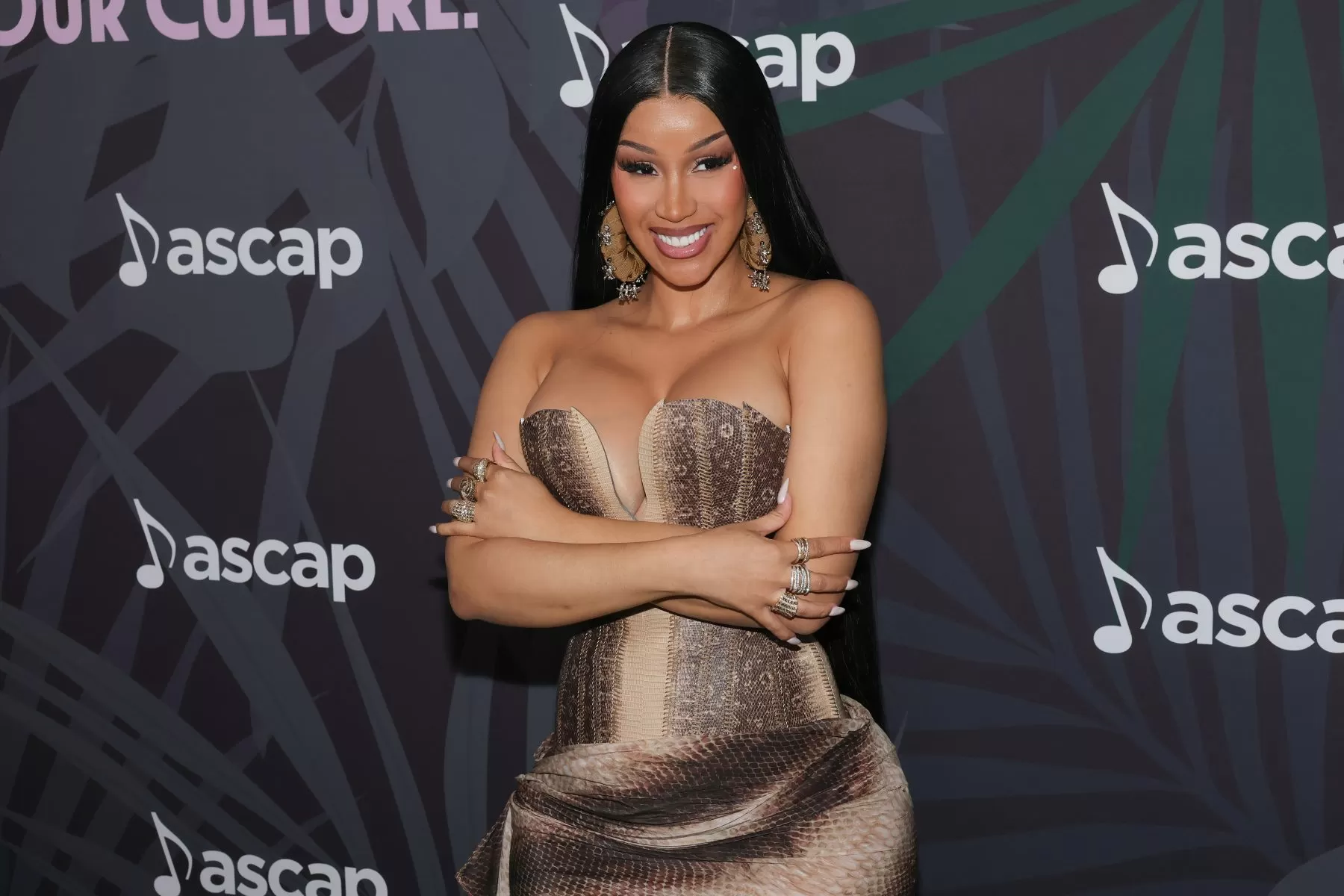
After a highly publicized trial, jurors have easily rejected Emani Ellis’ assault lawsuit against rapper Cardi B. However, the case has taken an unexpected turn as the presiding judge has accused Ellis’ lawyer of flouting the rules by asking Cardi about her alleged involvement with gangs on the witness stand.
The lawsuit, filed by Ellis in 2018, claimed that Cardi B had physically assaulted her at a New York strip club in August of that year. Ellis alleged that the rapper had thrown a bottle at her, causing injuries to her face and body. However, after a three-week trial, the jury unanimously found Cardi B not liable for the alleged assault.
While the verdict may have come as a relief to Cardi B and her legal team, the judge overseeing the case, Judge Joseph Zayas, has expressed his disappointment with the conduct of Ellis’ lawyer, Joe Tacopina. In a scathing statement, Judge Zayas accused Tacopina of violating the rules of evidence by asking Cardi B about her alleged gang affiliation during her testimony.
According to the judge, Tacopina’s line of questioning was not relevant to the case and was solely intended to damage Cardi B’s reputation. He also noted that Tacopina had failed to provide any evidence to support his claims of the rapper’s gang involvement. In fact, Cardi B has repeatedly denied any involvement with gangs and has even spoken out against them in the past.
The judge’s criticism of Tacopina’s tactics has sparked a debate about the role of lawyers in the courtroom. While it is their duty to vigorously defend their clients, they are also expected to adhere to the rules and maintain a level of professionalism. In this case, it seems that Tacopina may have crossed the line in his attempt to win the case for his client.
This is not the first time Tacopina has been accused of unethical behavior in the courtroom. In 2017, he was reprimanded by a judge for making inappropriate comments about a witness during a trial. It is concerning that he has once again resorted to questionable tactics in a high-profile case.
The judge’s criticism of Tacopina’s conduct has also raised questions about the validity of Ellis’ lawsuit. With no evidence to support her claims and a lawyer who has been accused of unethical behavior, it is understandable why the jury easily rejected the case. It is a reminder that the burden of proof lies with the accuser, and it is not enough to make baseless allegations without any evidence.
In light of these developments, it is important to remember that celebrities are also entitled to a fair trial. They should not be subjected to baseless accusations and character attacks in the courtroom. While it is understandable that Ellis may have felt wronged and wanted justice, it is the responsibility of her lawyer to present a strong and valid case, not resort to underhanded tactics.
Cardi B has been vocal about her innocence throughout the trial and has maintained her composure despite the allegations against her. She has also expressed her relief at the jury’s verdict and has thanked her legal team for their hard work. It is a testament to her strength and resilience that she has emerged from this trial with her reputation intact.
In conclusion, the recent developments in the Emani Ellis vs. Cardi B case have shed light on the importance of upholding the rules of evidence and maintaining professionalism in the courtroom. While the verdict may have been a victory for Cardi B, it is also a reminder that the justice system is not perfect and can be manipulated by those who do not adhere to its principles. Let us hope that this case serves as a lesson for all lawyers to uphold the integrity of the legal system and for individuals to think twice before making baseless accusations.