

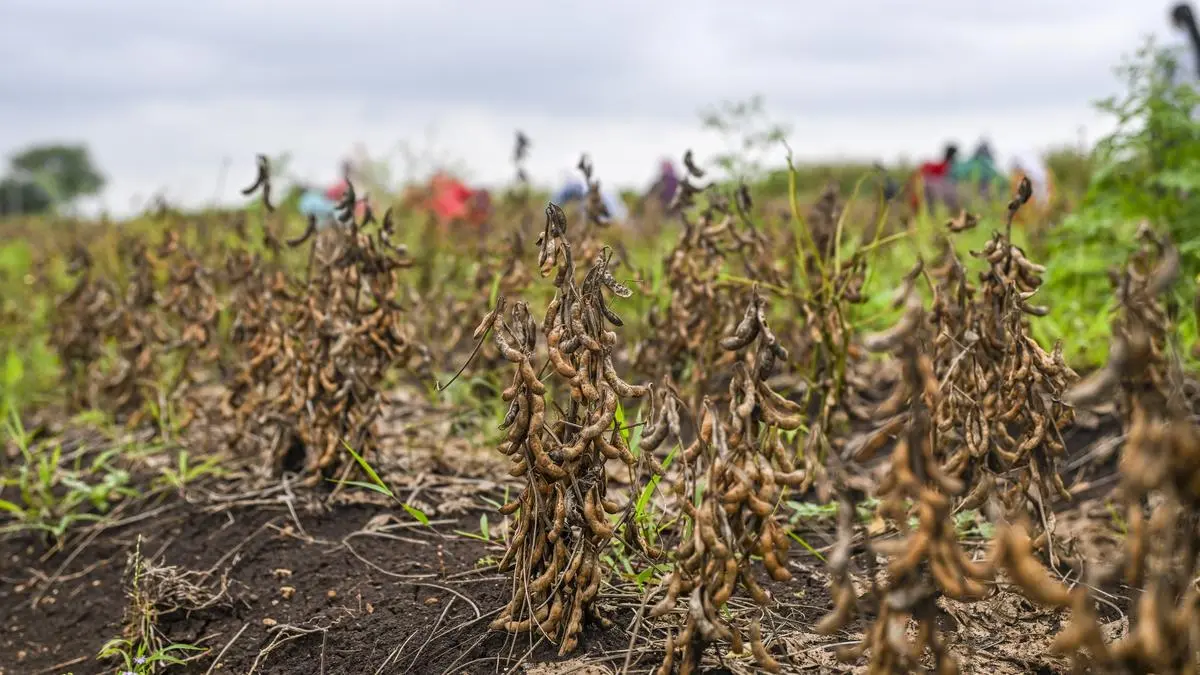
The agricultural sector is the backbone of our nation’s economy, providing food for our population and contributing significantly to our GDP. However, recent challenges have affected the productivity of our farmers, causing concerns for both the farmers and the consumers. Excess rain, Yellow Mosaic disease, and Aerial blight have been identified as the main culprits behind this decline.
Excess rain is a natural phenomenon that is necessary for the growth of crops. However, when it exceeds the required amount, it can have a detrimental effect on the crops. This year, our country has experienced unusually heavy rainfall, leading to flooding in many areas. This has caused delays in planting and harvesting, resulting in lower yields and damaged crops. Farmers have also faced challenges in transporting their produce to the markets due to flooded roads. As a result, their income has been significantly affected, and they are struggling to make ends meet.
Another major concern for our farmers is the Yellow Mosaic disease, which has been spreading rapidly across the country. This viral disease affects a wide range of crops, including vegetables, pulses, and oilseeds. It stunts the growth of plants and reduces their ability to produce fruits and vegetables. The disease is highly contagious and can spread quickly from one plant to another, making it difficult for farmers to control. This has resulted in a significant decline in the productivity of our crops, causing a shortage of essential food items in the market.
Aerial blight is yet another challenge that our farmers are facing. This fungal disease affects a variety of crops, including potatoes, tomatoes, and beans. It causes the leaves and stems of the plants to rot, leading to a decrease in their productivity. The disease is prevalent in areas with high humidity and can spread rapidly, destroying entire crops. Farmers have been struggling to control this disease, and many have lost their entire harvest, causing a severe blow to their livelihoods.
The combination of these three challenges has resulted in a significant decrease in the productivity of our farmers. This, in turn, has led to an increase in food prices, making it difficult for the average consumer to afford essential food items. The effects of these challenges are not limited to the agricultural sector; they have a ripple effect on the entire economy. As the prices of food items increase, the cost of living also rises, putting a strain on the financial stability of our citizens.
However, despite these challenges, our farmers have not lost hope. They continue to work tirelessly, day and night, to ensure that our nation has a steady supply of food. They have shown resilience and determination in the face of adversity, and their efforts are commendable. The government has also stepped in to provide support to the affected farmers, offering financial aid and providing them with the necessary resources to combat these challenges.
In addition, various agricultural research institutes and universities have been working tirelessly to find solutions to these problems. They have been conducting extensive research and have come up with innovative methods to control these diseases. The government has also been promoting the use of organic farming techniques, which are more resistant to these challenges. These efforts are already showing positive results, and we can see a gradual improvement in the productivity of our crops.
Furthermore, the government has also been investing in modernizing the agricultural sector. This includes the introduction of advanced technology and machinery, which can help farmers in increasing their productivity and reducing the impact of natural disasters. It is heartening to see that our government is taking proactive measures to support our farmers and ensure food security for our nation.
In conclusion, while the excess rain, Yellow Mosaic disease, and Aerial blight have posed significant challenges for our farmers, they have not given up. Through their hard work and determination, along with the support of the government and research institutes, we can overcome these challenges. We must also play our part by supporting our farmers and buying locally grown produce. Let us stand together as a nation and overcome these challenges, and emerge stronger and more resilient.