

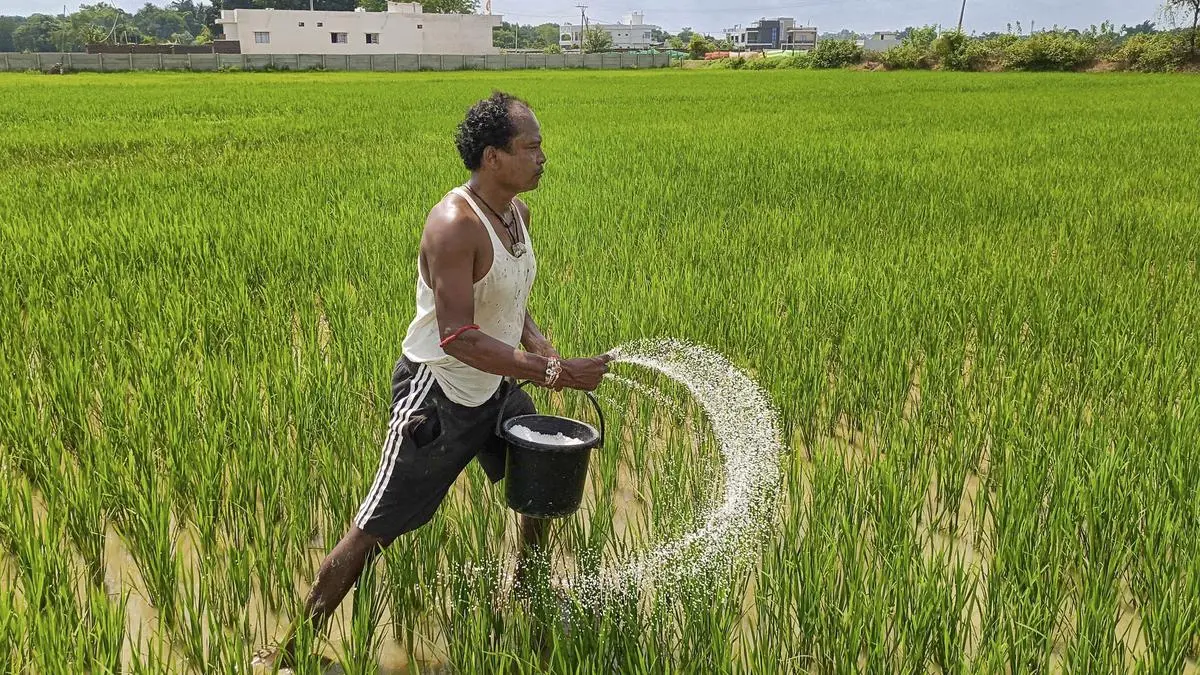
Kharif sowing activities in India have always been a crucial aspect of the country’s agricultural sector. With the arrival of the monsoon season, farmers across the country eagerly prepare their fields for sowing a variety of crops. However, this year, the Kharif season has shown mixed results, with varying rainfall patterns affecting crop yields.
The Kharif season, also known as the summer or monsoon season, starts in June and lasts until September. This is the time when the southwest monsoon brings much-needed rainfall to the Indian subcontinent, providing the necessary moisture for crops to grow. The success of the Kharif season is crucial for India’s agricultural sector, as it accounts for more than half of the country’s total food grain production.
This year, the Kharif season started on a positive note, with the southwest monsoon arriving on time and covering most parts of the country. However, as the season progressed, the rainfall patterns started to vary, with some regions receiving excess rainfall while others experiencing a deficit. This has had a significant impact on the sowing activities and crop yields in different parts of the country.
In states like Gujarat, Madhya Pradesh, and Maharashtra, excess rainfall has led to waterlogging and flooding, damaging crops and delaying sowing activities. On the other hand, states like Bihar, Jharkhand, and Odisha have faced a deficit in rainfall, leading to drought-like conditions and affecting crop yields. These varying patterns have created a challenging situation for farmers, who are struggling to cope with the unpredictable weather.
The state of Karnataka has also been affected by the erratic rainfall patterns. While some regions have received excess rainfall, others have faced a deficit, leading to a mixed bag of results for the Kharif season. The state government has taken several measures to support farmers, including providing seeds and fertilizers at subsidized rates and offering financial assistance to those affected by crop damage.
In Punjab, the state known as the “Granary of India,” the Kharif season has shown promising results. The state has received adequate rainfall, and farmers have successfully sown crops like paddy, cotton, and maize. The state government has also implemented various schemes to support farmers, such as providing free crop insurance and offering financial assistance for purchasing modern farming equipment.
Despite the challenges posed by varying rainfall patterns, some states have managed to achieve significant success in the Kharif season. In Uttar Pradesh, the country’s largest state, farmers have sown crops on a record-breaking 10.5 million hectares of land, surpassing the previous year’s record of 9.5 million hectares. The state government has also taken proactive measures to support farmers, such as providing free seeds and fertilizers and offering financial assistance for crop damage.
In Andhra Pradesh, the state government’s efforts to promote organic farming have yielded positive results in the Kharif season. Farmers have successfully sown crops like paddy, maize, and pulses using organic methods, leading to higher yields and better quality produce. The state government has also provided training and financial assistance to farmers to encourage them to adopt organic farming practices.
The success of the Kharif season is not only crucial for the country’s food security but also for the livelihoods of millions of farmers. The government has taken several steps to support farmers, such as increasing the minimum support price for crops, providing financial assistance for crop damage, and implementing various schemes to promote sustainable farming practices. These efforts have helped mitigate the impact of varying rainfall patterns on the Kharif season.
In conclusion, the Kharif sowing activities in India have shown mixed results this year, with varying rainfall patterns affecting crop yields. While some states have faced challenges due to excess or deficit rainfall, others have achieved significant success. The government’s efforts to support farmers have played a crucial role in mitigating the impact of these challenges. As we move towards the end of the Kharif season, let us hope for a bountiful harvest and a prosperous future for our farmers.