

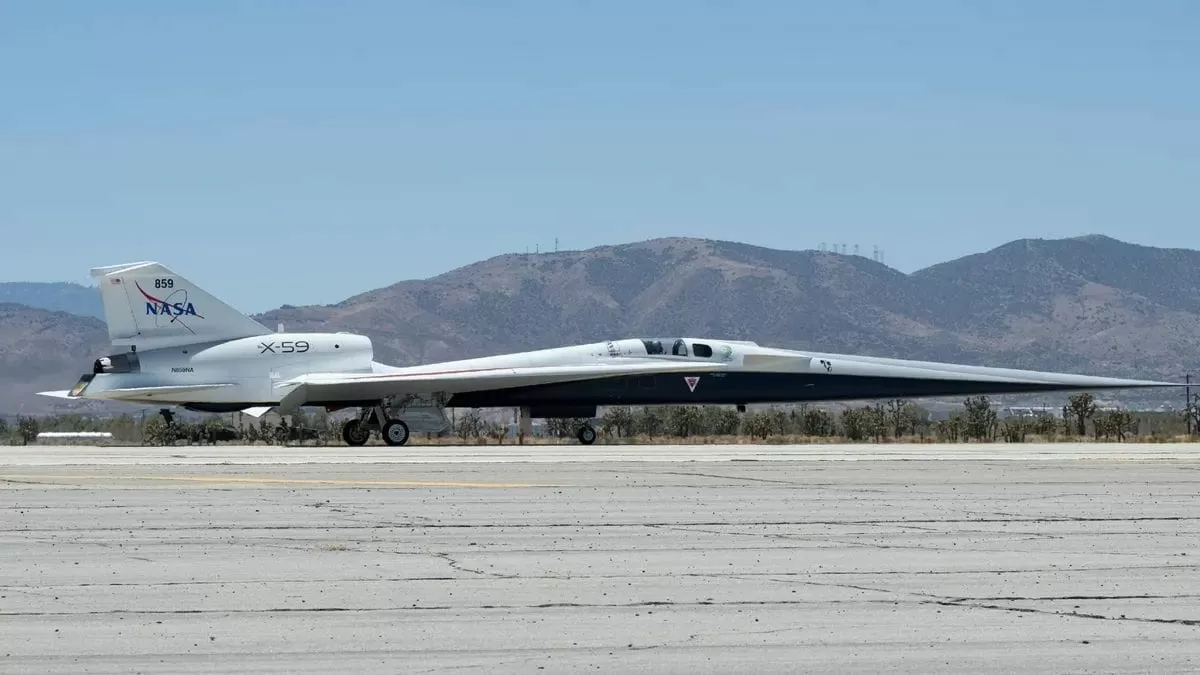
NASA and Lockheed Martin’s X-59 Experimental Aircraft: Paving the Way for Quiet Supersonic Travel
In the world of aviation, speed has always been a top priority. However, with speed comes a major drawback – the loud sonic boom that is created when an aircraft breaks the sound barrier. This has been a major concern for decades, as the loud noise can be disruptive and even damaging to the environment. But thanks to NASA and Lockheed Martin, a solution is on the horizon. The X-59 experimental aircraft, designed for quiet supersonic travel, is currently undergoing taxi tests at the U.S. Air Force’s Plant 42, bringing us one step closer to a quieter and more sustainable future of air travel.
The X-59 is a joint project between NASA and Lockheed Martin, with the goal of developing a supersonic aircraft that can fly at speeds of up to Mach 1.4 (approximately 1,000 miles per hour) without creating a loud sonic boom. This would allow the aircraft to fly over land without causing disturbance to those on the ground. The project is part of NASA’s larger initiative to develop new technologies for sustainable aviation, known as the New Aviation Horizons program.
One of the most unique features of the X-59 is its AR-enabled camera vision system. This advanced technology uses augmented reality to provide the pilot with a 360-degree view of the aircraft’s surroundings, making it easier to navigate and land the aircraft. This system also allows for better visibility during takeoff and landing, which is crucial for a supersonic aircraft.
In addition to its advanced camera system, the X-59 also boasts a boom-reducing shape. The aircraft is designed with a long, slender shape and a pointed nose, which helps to minimize the shockwaves that cause the loud sonic boom. This innovative design is a major breakthrough in supersonic travel and has the potential to revolutionize the industry.
The X-59 is currently undergoing taxi tests at the U.S. Air Force’s Plant 42 in Palmdale, California. This facility has a rich history in aerospace engineering, and it is no stranger to groundbreaking projects. It has been home to iconic programs such as the F-22 Raptor and the Space Shuttle assembly, and now it continues to make history with the X-59.
The taxi tests at Plant 42 are an important step in the development of the X-59. These tests allow the engineers to evaluate the aircraft’s performance and make any necessary adjustments before it takes to the skies. The X-59 is expected to make its first flight in 2022, and if successful, it will be the first supersonic aircraft to fly over land without creating a loud sonic boom.
The X-59 project is not only a major achievement in aviation technology, but it also carries a significant legacy for NASA at Plant 42. This facility has been a hub for innovation and progress in the aerospace industry, and the X-59 is just the latest addition to its impressive portfolio. The success of this project will not only benefit the aviation industry but also pave the way for future advancements in supersonic travel.
The development of the X-59 is a testament to the power of collaboration and innovation. NASA and Lockheed Martin have joined forces to tackle one of the biggest challenges in aviation, and their efforts have resulted in a groundbreaking aircraft that has the potential to change the way we travel. The X-59 is a shining example of what can be achieved when we push the boundaries of technology and work towards a common goal.
In conclusion, the X-59 experimental aircraft is a game-changer in the world of aviation. Its advanced technology, including the AR-enabled camera system and boom-reducing shape, has the potential to revolutionize supersonic travel and make it more sustainable. The ongoing taxi tests at Plant 42 are a testament to the hard work and dedication of the engineers and scientists involved in this project. We eagerly await the first flight of the X-59 and look forward to a future of quieter and more efficient air travel.