

NASA’s Parker Solar Probe Achieves Solar Milestone with Closest-Ever Images of the Sun
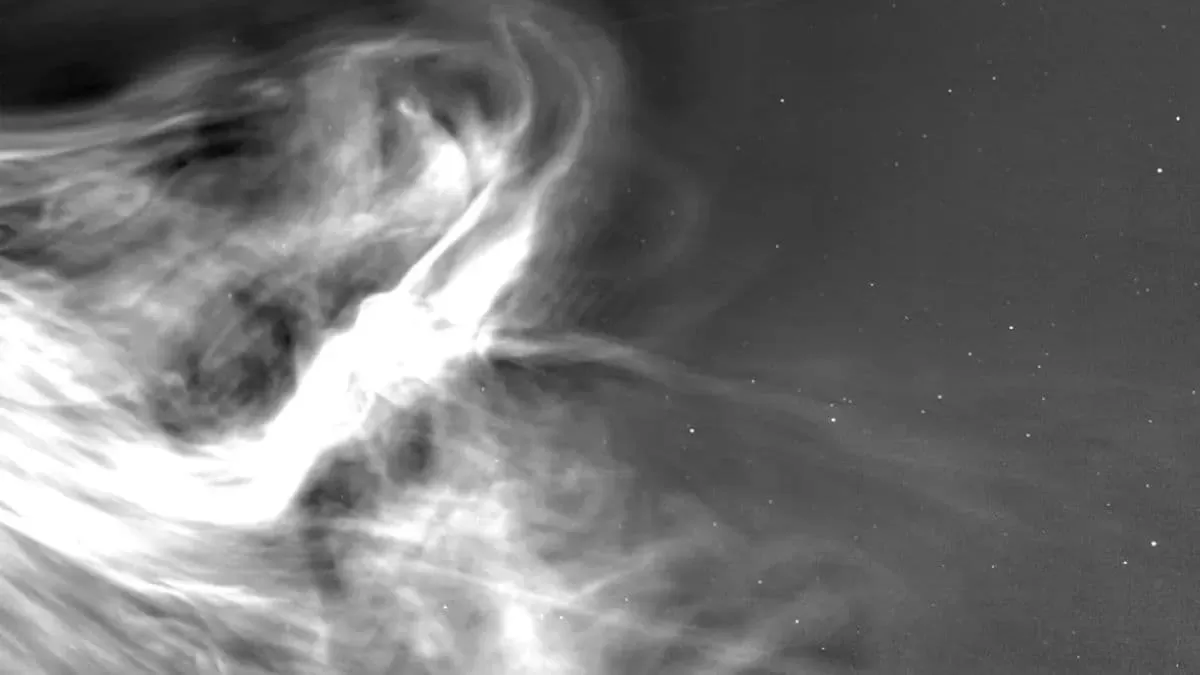
In December 2024, NASA’s Parker Solar Probe made history by capturing the closest-ever images of the Sun, taken just 3.8 million miles from its surface. This incredible feat has provided scientists with unprecedented details of the Sun’s corona, solar wind, and CME collisions. This breakthrough is a significant step forward in our understanding of the Sun and its impact on our planet.
The Parker Solar Probe, named after renowned solar physicist Eugene Parker, was launched in August 2018 with the mission to study the Sun’s outer atmosphere, also known as the corona. This region of the Sun is of great interest to scientists as it is where solar wind and solar storms originate. However, due to the intense heat and radiation, it has been a challenge to get close enough to study it in detail.
But the Parker Solar Probe has changed that. With its specially designed heat shield, the probe is able to withstand temperatures of up to 2,500 degrees Fahrenheit as it travels through the corona. This has allowed it to get closer to the Sun than any other spacecraft in history, providing us with groundbreaking images and data.
The images captured by the probe’s Wide-field Imager for Solar Probe (WISPR) instrument have revealed stunning details of the Sun’s corona. The corona is the outermost layer of the Sun’s atmosphere and is only visible during a total solar eclipse or with specialized instruments like the WISPR. These images show the corona in unprecedented detail, with intricate structures and patterns that were previously unknown.
But it’s not just the corona that the Parker Solar Probe is studying. It is also providing us with valuable information about the solar wind, a stream of charged particles that constantly flows from the Sun. This wind can have a significant impact on Earth’s magnetic field and can cause disruptions in our technology, such as satellite communication and power grids. By studying the solar wind up close, scientists hope to improve our ability to forecast and prepare for these space weather events.
In addition, the Parker Solar Probe is also studying coronal mass ejections (CMEs), which are massive eruptions of plasma and magnetic field from the Sun. These can also have a significant impact on Earth’s magnetic field and can cause geomagnetic storms. By capturing images of CMEs up close, scientists can better understand their behavior and predict their effects on Earth.
The data and images captured by the Parker Solar Probe are not only providing us with a better understanding of the Sun, but they are also helping us to improve our technology and infrastructure. By studying the Sun’s corona, solar wind, and CMEs, we can develop better methods for predicting and preparing for space weather events, ultimately protecting our technology and society.
This milestone achievement by the Parker Solar Probe is a testament to the incredible advancements in technology and the dedication of the scientists and engineers involved in this mission. It is a reminder of the power and complexity of our Sun and the importance of studying it in detail.
As we continue to explore and learn more about our closest star, the Parker Solar Probe will continue its journey, getting even closer to the Sun in the years to come. With each new image and data point, we are gaining a deeper understanding of the Sun and its impact on our planet. This breakthrough is a significant step forward in our quest to unlock the mysteries of the Sun and improve our ability to forecast and prepare for space weather events.