

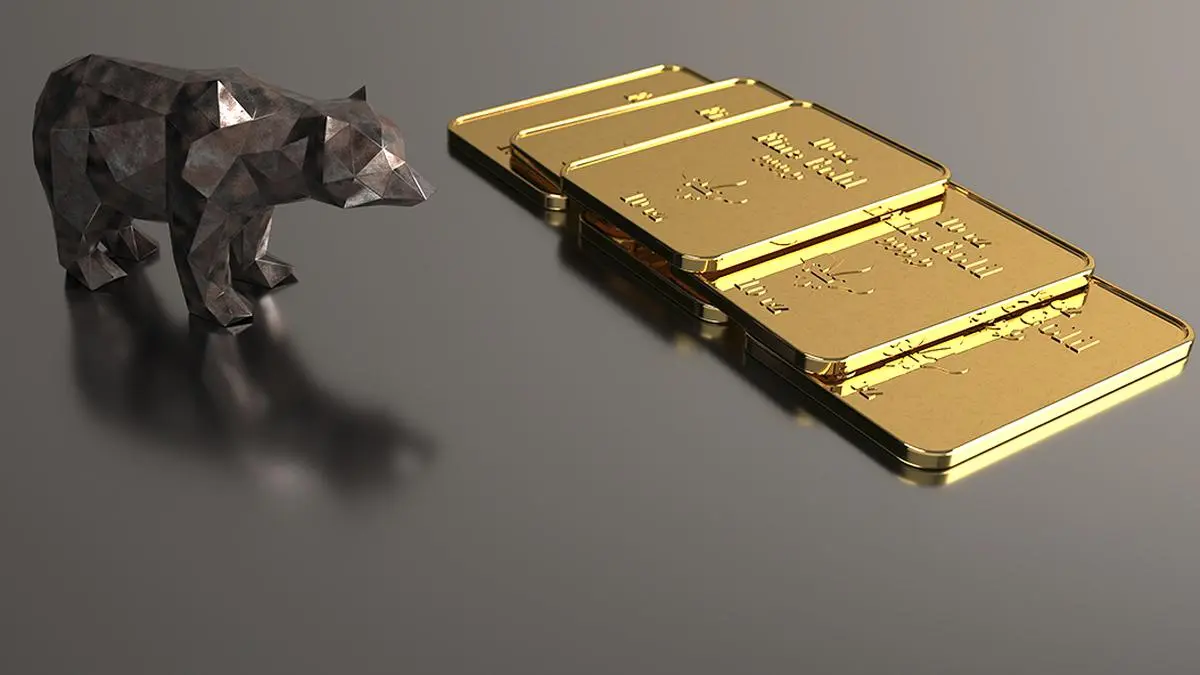
In recent years, gold has been a popular investment choice for many individuals and institutions. Its value has been on a steady rise, making it a safe haven for investors during times of economic uncertainty. However, according to the World Gold Council (WGC) China research head, past events may slow down the rally in gold.
The WGC is a leading authority on gold market intelligence and is responsible for providing insights and analysis on the global gold market. In a recent statement, the WGC China research head, Fei Wang, highlighted that while gold has been performing well, there are certain events that may hinder its rally in the future.
One of the main factors that may slow down the rally in gold is the ongoing trade tensions between the United States and China. The two economic giants have been engaged in a trade war for over a year now, and this has had a significant impact on the global economy. The uncertainty surrounding the trade negotiations has led to a rise in gold prices as investors seek a safe haven for their money. However, if the trade tensions are resolved, it could lead to a decrease in demand for gold, thus slowing down its rally.
Another event that may affect the rally in gold is the US Federal Reserve’s interest rate decisions. In recent years, the Fed has been gradually increasing interest rates, which has had a negative impact on gold prices. Higher interest rates make it more expensive to hold gold, as it does not generate any income. As a result, investors may shift their focus to other investment options, leading to a decrease in demand for gold.
Moreover, the global economic slowdown may also have an impact on the rally in gold. The International Monetary Fund (IMF) recently downgraded its global growth forecast for 2019 and 2020, citing trade tensions and geopolitical uncertainties as the main reasons. A weaker global economy could lead to a decrease in demand for gold, as investors may opt for more stable and profitable investment options.
However, despite these potential hindrances, the WGC China research head remains positive about the future of gold. Wang believes that gold will continue to play a crucial role in investors’ portfolios, especially during times of economic uncertainty. He also highlighted that the demand for gold in China, the world’s largest consumer of the precious metal, remains strong.
In addition, the WGC China research head pointed out that central banks around the world have been increasing their gold reserves. In 2018, central banks bought a record 651.5 tonnes of gold, the highest level since 1971. This trend is expected to continue in the coming years, as central banks look to diversify their reserves and reduce their reliance on the US dollar.
Furthermore, the demand for gold in the technology sector is also expected to increase. Gold is a key component in the production of electronic devices, and with the rise of technologies such as 5G and electric vehicles, the demand for gold is expected to grow.
In conclusion, while there may be events that could slow down the rally in gold, the WGC China research head remains optimistic about the future of the precious metal. Gold has always been a valuable asset, and its role as a safe haven during times of economic uncertainty cannot be ignored. With the increasing demand from central banks and the technology sector, gold is expected to maintain its position as a valuable investment option. As always, investors should carefully consider all factors before making any investment decisions.