

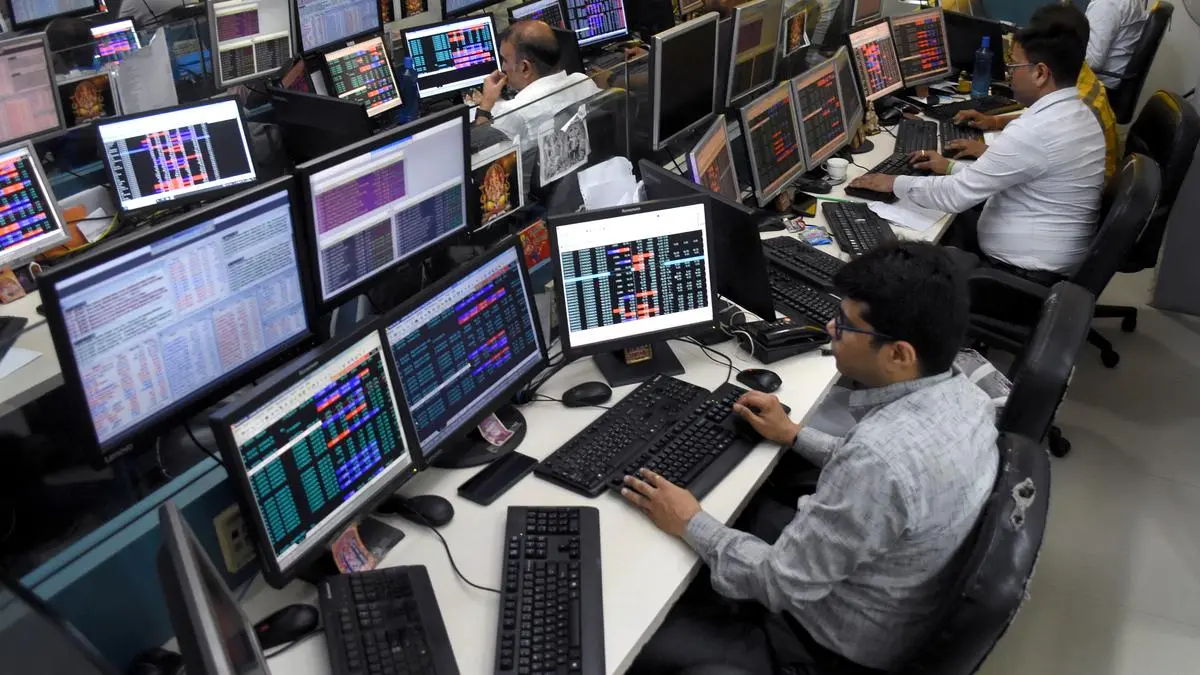
The Indian stock market once again saw a positive trend as the Sensex and Nifty 50 closed higher on Tuesday, gaining 270 points and 61.20 points respectively. With the Sensex closing at 83,712.51 and Nifty 50 settling at 25,522, investors are filled with optimism and confidence in the market. This rise in the market has been attributed to various factors, including positive global cues and the government’s efforts to revive the economy.
The Sensex, which is the benchmark index of the Bombay Stock Exchange (BSE), gained 0.32% on Tuesday, a significant increase from its previous closing of 83,442.39. Similarly, the Nifty 50, which is the National Stock Exchange’s (NSE) barometer, rose by 0.24% from its previous close of 25,460.80. This surge in the market has been fuelled by strong buying in IT, banking, and FMCG stocks.
One of the major factors driving this positive trend in the market is the global cues. The Asian markets were trading higher on Tuesday, with Japan’s Nikkei rising by 0.43% and China’s Shanghai Composite gaining 0.34%. This was followed by European markets opening on a positive note, with the UK’s FTSE and Germany’s DAX trading higher by 0.55% and 0.43% respectively. These positive global cues have had a ripple effect on the Indian stock market, boosting investor sentiment and instilling confidence in the market.
Furthermore, the government’s efforts to revive the economy have also played a crucial role in the market’s upward movement. The recent reforms and policies announced by the government, such as the cut in corporate tax rates and the proposed disinvestment in key public sector companies, have been well received by investors. These measures are expected to boost the economy and attract more foreign investments, which in turn will have a positive impact on the stock market.
The rise in the market has also been attributed to the strong performance of key sectors such as IT, banking, and FMCG. The IT sector, in particular, has been performing exceptionally well, with companies reporting better-than-expected earnings and revenue. This has been a major driving force behind the market’s upward trend.
The banking sector has also contributed significantly to the market’s gains. With the recent merger of several public sector banks, the sector has seen a surge in investor interest. The consolidation is expected to improve the financial health of these banks and boost their overall performance, which has been reflected in the market’s positive response.
The FMCG sector, which is considered to be a defensive sector, has also been performing well in the market. With the festive season around the corner, the demand for FMCG products is expected to increase, further boosting the sector and the overall market.
The rise in the stock market has brought a ray of hope to investors who have faced a challenging year due to the pandemic. It is a testament to the resilience and strength of the Indian economy and its ability to bounce back from difficult situations. The market’s positive movement has also been a boost to the government’s efforts to revive the economy and instill confidence in investors.
As the market continues to show signs of recovery, investors are advised to remain cautious and make informed decisions. It is essential to keep a long-term perspective and invest in fundamentally strong companies for sustainable returns. With the festive season and the upcoming earnings season, the market is expected to maintain its positive trend, providing investors with more opportunities to grow their wealth.
In conclusion, the rise in the Sensex and Nifty 50 is a clear indication of the market’s resilience and the positive sentiment among investors. With the government’s efforts to revive the economy and the strong performance of key sectors, the Indian stock market is well on its way to recovery. This upward trend is expected to continue, providing investors with a promising outlook for the future. It is a time to remain optimistic and have faith in the potential of the Indian stock market.