

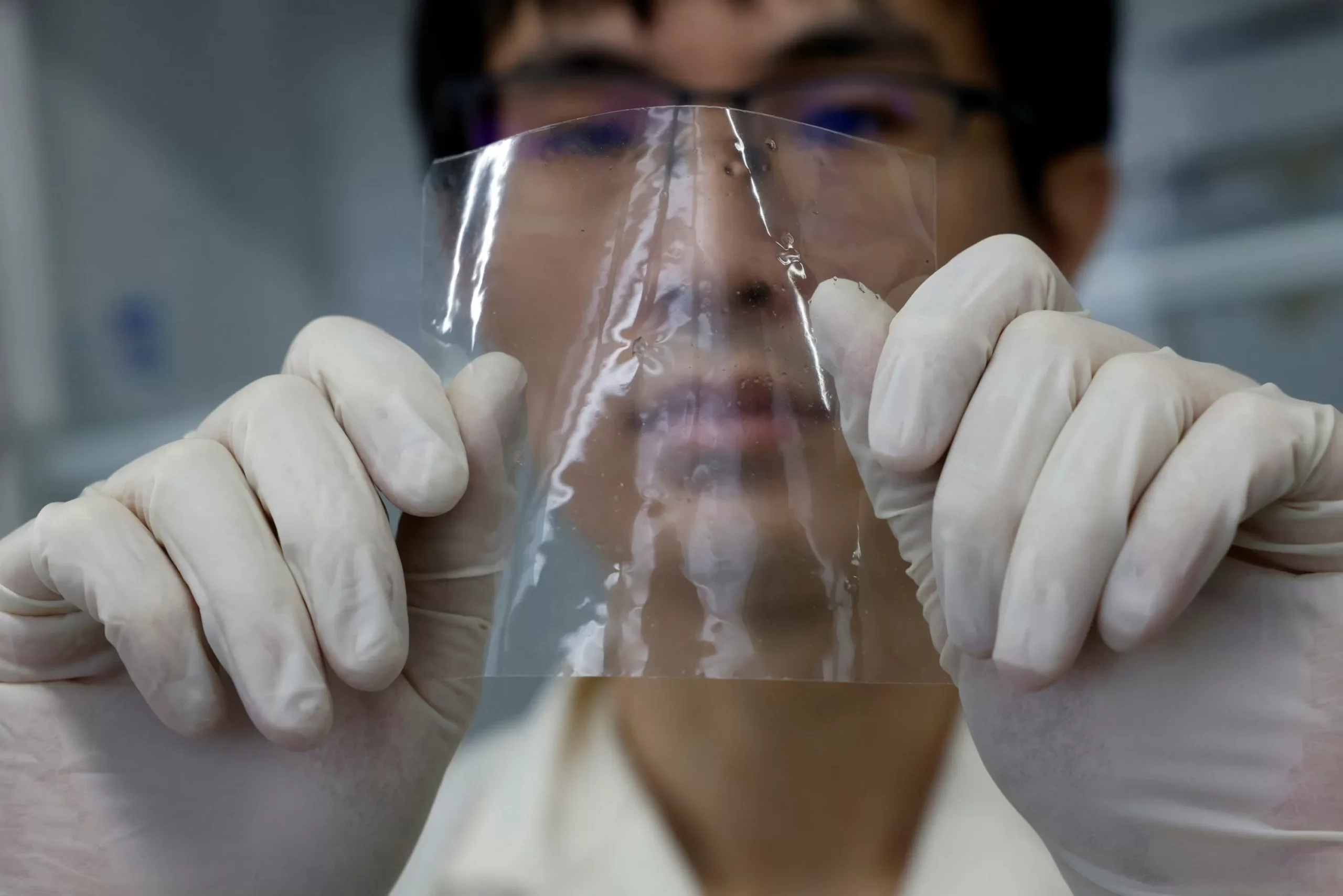
Researchers in Japan have made a major breakthrough in the fight against ocean pollution with the development of a new type of plastic that dissolves in seawater within hours. This innovative solution has the potential to address one of the biggest challenges facing our oceans today – the alarming amount of plastic waste that is polluting our waters and harming marine life.
The problem of plastic pollution in our oceans has been a growing concern for decades. Every year, millions of tons of plastic waste end up in the ocean, causing significant damage to marine ecosystems and posing a threat to the health of the planet. This is a global crisis that requires urgent action, and Japanese researchers have stepped up to the challenge with their groundbreaking discovery.
The team of scientists at the Kyoto University of Technology has developed a new type of plastic that is not only strong and durable but also completely biodegradable. This means that when it ends up in the ocean, it breaks down into harmless substances within a matter of hours, unlike traditional plastics that can take hundreds of years to decompose.
The key to this revolutionary plastic lies in its chemical composition. The researchers have created a new type of polymer that is derived from starch, a natural and renewable resource. This makes the plastic not only biodegradable but also environmentally friendly. It does not contain any harmful chemicals or toxins, making it safe for marine life and the ocean ecosystem.
The plastic has been tested extensively in laboratory conditions, and the results have been very promising. When placed in seawater, the plastic completely dissolves within a few hours, leaving behind only water and carbon dioxide. This is a significant improvement compared to traditional plastics that break down into microplastics, which continue to harm the environment and wildlife.
One of the major advantages of this new plastic is its versatility. It can be used in a wide range of products, from packaging materials to single-use items like straws and utensils. This means that it has the potential to replace traditional plastics in many industries, significantly reducing the amount of plastic waste that ends up in the ocean.
The researchers are confident that their new plastic can make a significant impact on the problem of ocean pollution. They have already started collaborating with companies to mass-produce the plastic and make it available for commercial use. This is a crucial step towards reducing the amount of plastic waste that is generated and preventing it from entering our oceans.
In addition to its biodegradability, the new plastic also has other benefits. It is lightweight, strong, and can be easily molded into different shapes, making it suitable for a variety of applications. It is also cost-effective, which is a crucial factor in encouraging businesses to switch to this eco-friendly alternative.
The potential of this new plastic to address the issue of ocean pollution is immense. It has the power to transform the way we think about and use plastic, making it a valuable asset in the fight against plastic waste. With its quick dissolution in seawater, it offers a practical solution to the problem that has been plaguing our oceans for far too long.
The Japanese researchers have set an excellent example for the rest of the world to follow. Their innovative approach and commitment to finding solutions for environmental issues are truly commendable. The development of this new plastic is a significant step towards a cleaner and healthier ocean, and it is a cause for celebration.
In conclusion, the new plastic developed by researchers in Japan is a game-changer in the fight against ocean pollution. Its ability to dissolve in seawater within hours and its environmentally friendly composition make it a potential solution to the modern-day scourge that is harming our oceans and wildlife. It is a testament to the power of innovation and serves as a reminder that with determination and dedication, we can overcome even the most challenging problems. It is time for the world to take notice and embrace this new plastic as a vital step towards a cleaner and more sustainable future.