

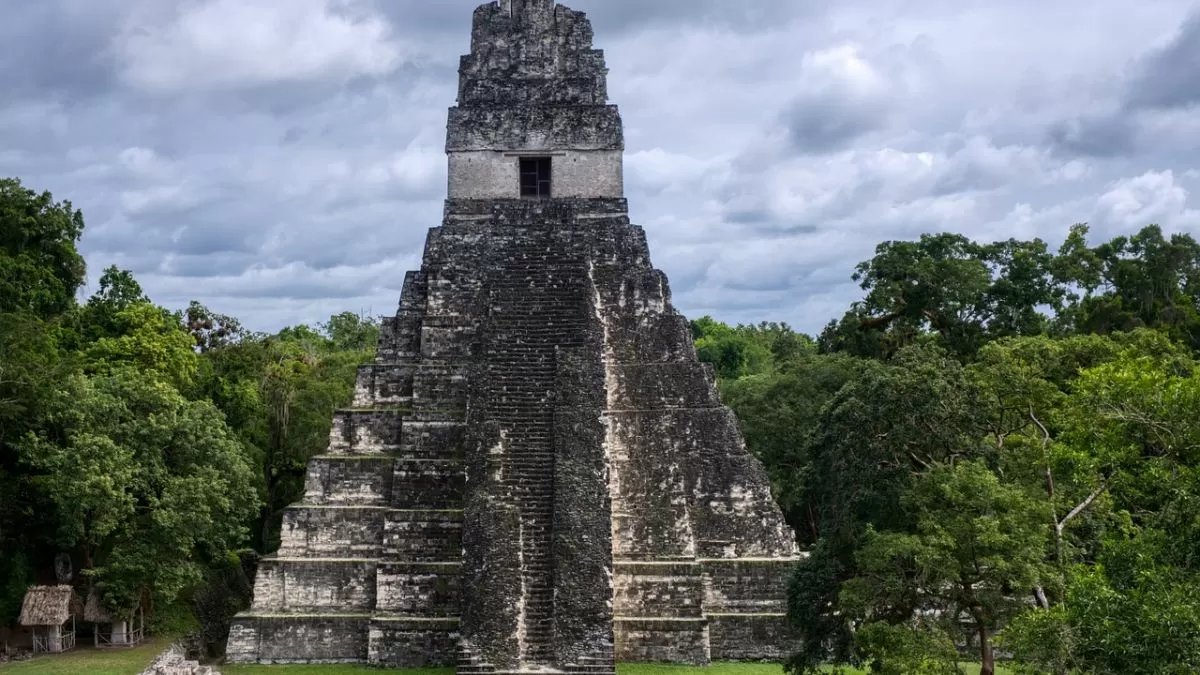
The mystery surrounding the sudden collapse of the ancient Maya civilization has long been a topic of fascination and speculation. For decades, experts and scholars have debated the reasons behind the decline of this once-great civilization. However, a groundbreaking genetic study published in Current Biology has revealed that the Maya did not vanish as mysteriously as previously thought.
For centuries, the prevailing belief was that around 1,200 years ago, the Maya civilization collapsed, leaving behind abandoned cities and monuments, and a population that seemingly disappeared without a trace. Many theories have been proposed, from drought and famine to war and disease. However, the recent study has challenged these long-held notions.
By analyzing the ancient genomes of people buried in the ancient city of Copán in western Honduras, a team of researchers discovered something unexpected – strong genetic continuity between the Late Archaic era and modern Maya groups. This evidence has turned the tables on the idea of a collapse, painting a very different picture of the Maya people who continued to thrive and evolve over centuries.
The ancient city of Copán, known for its impressive stone monuments, was once a bustling center of trade and culture. Its downfall was believed to be a turning point in the history of the Maya civilization. However, the new study, led by Professor Douglas Kennett from the University of California, Santa Barbara, has shed light on the population dynamics of this ancient city.
The team analyzed the genetic material of 19 individuals buried in Copán, spanning a period of over 2,000 years. They found a remarkable genetic continuity between the ancient and modern Maya groups, suggesting that the Maya people did not disappear or experience a sudden decline, but rather, continued to thrive and evolve over centuries.
The study also revealed that the Copán population had a diverse genetic makeup, with a mix of ancestral lineages from both North and South America. This suggests that the ancient Maya were a highly connected and cosmopolitan society, contrary to the popular belief that they were isolated and insular.
The findings of this study have challenged the long-held theories of collapse and instead, paint a picture of a resilient and adaptable civilization. It appears that the Maya people were able to withstand the challenges they faced and continued to thrive, not just in Copán, but in other regions as well.
The implications of this study go beyond our understanding of the Maya civilization. It also sheds light on the complexities of human population dynamics and challenges the idea that ancient populations were static and isolated. The Maya people were able to adapt and evolve, and their genetic continuity is a testament to their resilience and ability to thrive despite changing circumstances.
This groundbreaking study has opened up new avenues for research and has sparked a renewed interest in the ancient Maya civilization. It has shattered long-held beliefs and challenged us to rethink our understanding of this fascinating culture. By focusing on the genetic makeup of the Maya people, the study has given us a deeper insight into their history, culture, and way of life.
Moreover, this study is a testament to the power of interdisciplinary research and collaboration. By combining genetic analysis with archaeological and anthropological evidence, the team was able to uncover a new perspective on the Maya civilization. This serves as an inspiration for future studies and encourages us to think outside the box when it comes to understanding our past.
In conclusion, the groundbreaking genetic study published in Current Biology has revealed that the Maya civilization did not mysteriously vanish around 1,200 years ago. The evidence of strong genetic continuity challenges the idea of collapse and instead paints a picture of a resilient and adaptable civilization. This study has not only expanded our understanding of the ancient Maya but also serves as a reminder of the enduring legacy of this remarkable civilization.