

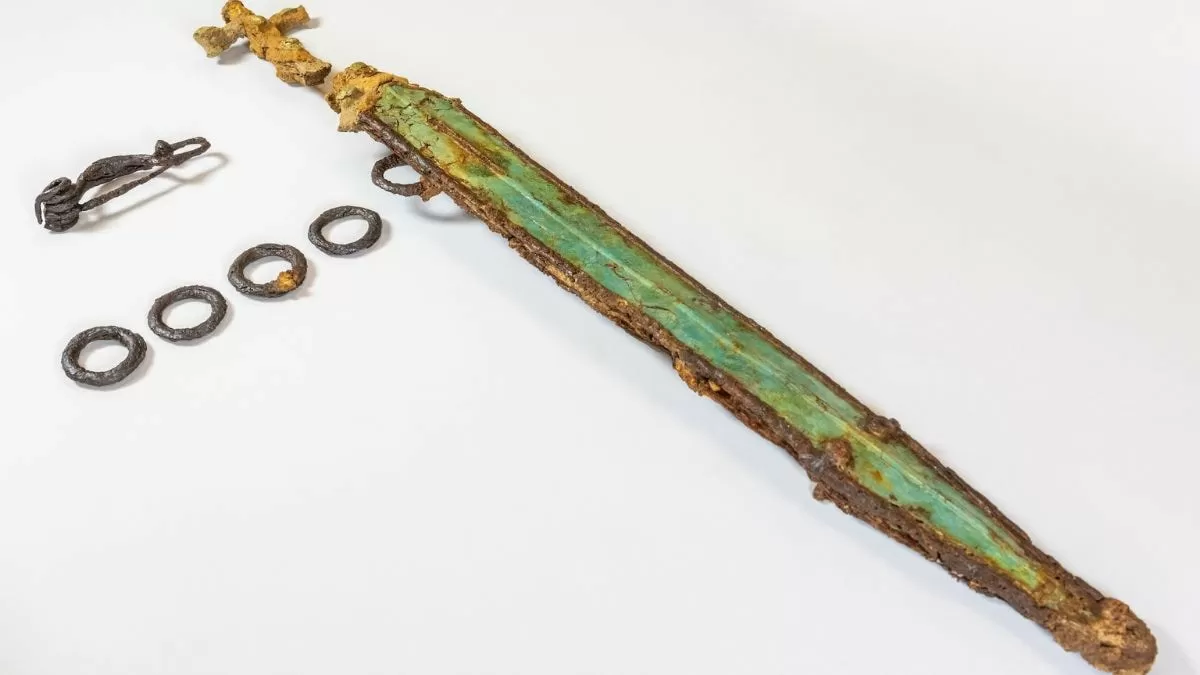
Archaeologists have made an exciting discovery in the necropolis of France, unearthing two 2,300-year-old swords from the second Iron Age. The swords were found alongside a variety of burial artifacts, including brooches and jewelry, providing a glimpse into the lives and customs of the ancient inhabitants of this region.
The discovery was made by a team of dedicated archaeologists who have been working tirelessly to uncover the secrets of this ancient site. Led by renowned archaeologist Dr. Marie Leclerc, the team has been excavating the necropolis for several months, hoping to shed light on the history of this region.
The swords, made of iron and measuring over a meter in length, are believed to have been used for ceremonial purposes rather than for battle. They are exquisitely crafted, with intricate designs and patterns etched into the blades. The level of craftsmanship and attention to detail is a testament to the advanced skills of the people who created them.
But what has captured the attention of the archaeological community is the presence of swastikas on the swords. The swastika, a symbol that has been used for thousands of years in various cultures, has been a topic of much discussion and debate in recent times due to its association with Nazi Germany. However, in this context, it is important to note that the swastika has been used as a symbol of good fortune and prosperity in many ancient cultures, including the one that existed in France during the second Iron Age.
Dr. Leclerc and her team are careful not to jump to conclusions about the significance of the swastikas on the swords. They understand the sensitivity surrounding the symbol and are working diligently to uncover more information about its meaning in this particular context. It is a reminder of the importance of contextualizing historical artifacts and not judging them based on our present-day beliefs and values.
The swords were found buried with other artifacts, including brooches, jewelry, and pottery, providing a glimpse into the funerary customs of the ancient inhabitants of this region. The meticulous placement of these objects suggests that they held great importance in the lives of the people who were buried here.
The discovery of these swords and burial artifacts is a significant contribution to our understanding of the second Iron Age in France. It provides valuable insights into the beliefs, customs, and way of life of the people who lived in this region over two millennia ago. It is a testament to the rich and diverse history of France and the importance of preserving and studying our past.
The team of archaeologists is now working to carefully clean and preserve the swords and other artifacts before they are displayed in a museum for the public to see and learn from. This discovery also highlights the importance of preserving archaeological sites and artifacts for future generations to study and appreciate.
The excitement and enthusiasm surrounding this discovery are palpable, with many experts and enthusiasts eagerly waiting for further updates from the team. The unearthing of these swords and burial artifacts is a reminder of the endless possibilities and mysteries that lie buried beneath the earth, waiting to be discovered.
In conclusion, the discovery of two 2,300-year-old swords in the necropolis of France is a significant find that sheds light on the second Iron Age in this region. The presence of swastikas on the swords adds an intriguing element to the discovery, sparking discussions and further research. It is a reminder of the importance of understanding historical artifacts in their proper context and the need for continued preservation and study of our past. The team of archaeologists has once again showcased the importance of their work in uncovering the mysteries of our past and preserving them for future generations.