

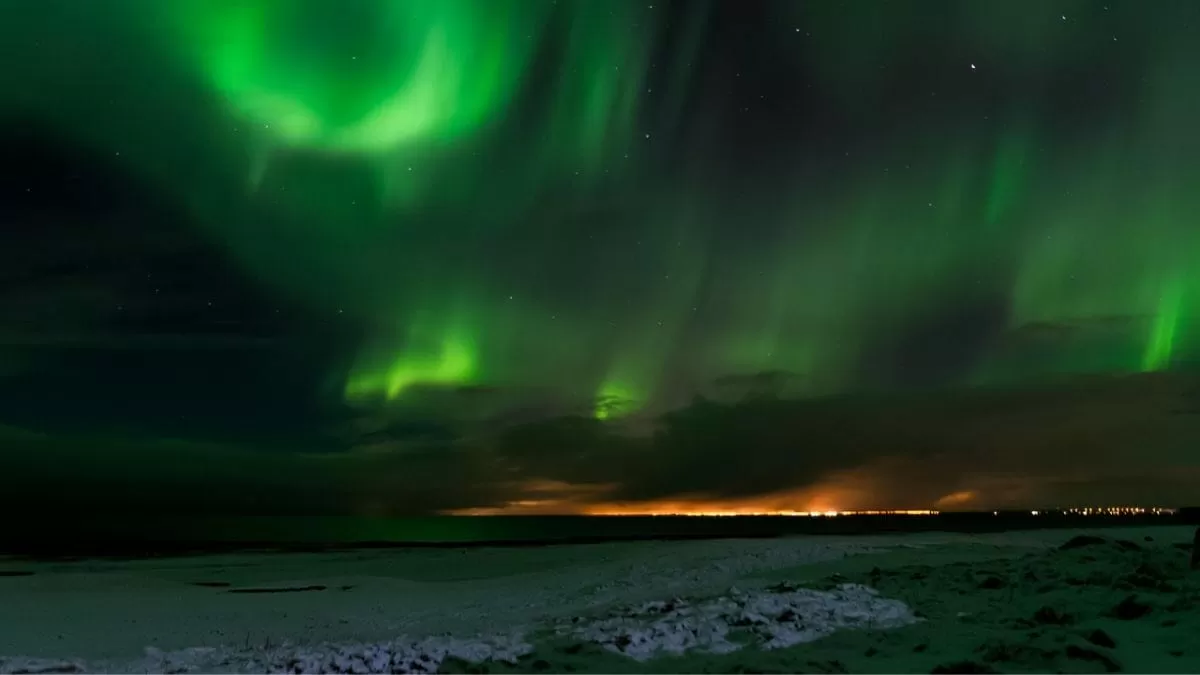
A dazzling display of lights is expected to grace the night sky tonight as a solar storm is predicted to hit Earth, potentially reaching as far south as New York and Idaho. The Space Weather Prediction Center (SWPC) of NOAA has forecasted a G1-class geomagnetic storm, with a possibility of even stronger G2 conditions. This is an exciting event that may lead to disruptions in GPS and radio signals, but also offers a rare opportunity to witness the stunning northern lights.
The solar storm, also known as a geomagnetic storm, is caused by a disturbance in the Earth’s magnetic field due to an influx of charged particles from the sun. These particles, also known as solar winds, interact with the Earth’s magnetic field and create a dazzling display of colors in the sky known as auroras. These are most commonly seen in the polar regions, but during a strong solar storm, they can be visible in lower latitudes as well.
According to the SWPC, the best time to witness the northern lights will be between the hours of 10:00 PM and 1:00 AM local time. However, this is a natural phenomenon and can be unpredictable, so keep your eyes on the sky throughout the night for a chance to catch a glimpse of this rare and beautiful event.
For those lucky enough to witness the northern lights, the experience is truly mesmerizing. The sky will be illuminated with vibrant colors such as green, pink, and purple, dancing and shifting in the darkness. It is a sight that will leave you in awe and wonder.
But as we eagerly anticipate this natural light show, there are also some precautions to keep in mind. The solar storm may lead to disruptions in GPS and radio signals, so it is advisable to limit your outdoor activities that require these technologies. It is also important to follow any safety guidelines issued by local authorities.
If you are planning to capture this event on camera, make sure to have a tripod and use a long exposure to capture the full beauty of the auroras. And don’t forget to share your photos with friends and family, as well as on social media, to spread the joy of this rare occurrence.
This solar storm is also a reminder of the importance of monitoring and understanding space weather. The SWPC’s continuous efforts in predicting and monitoring solar activity help us better prepare for potential disruptions and also give us the opportunity to witness the magnificent auroras.
So, don’t forget to look up at the sky tonight and witness this breathtaking display of nature’s beauty. And if you are not in the predicted viewing areas, don’t be disheartened as there may still be a chance to see the auroras from other locations. Keep your hopes high and your eyes on the sky for a chance to witness this spectacular event.