

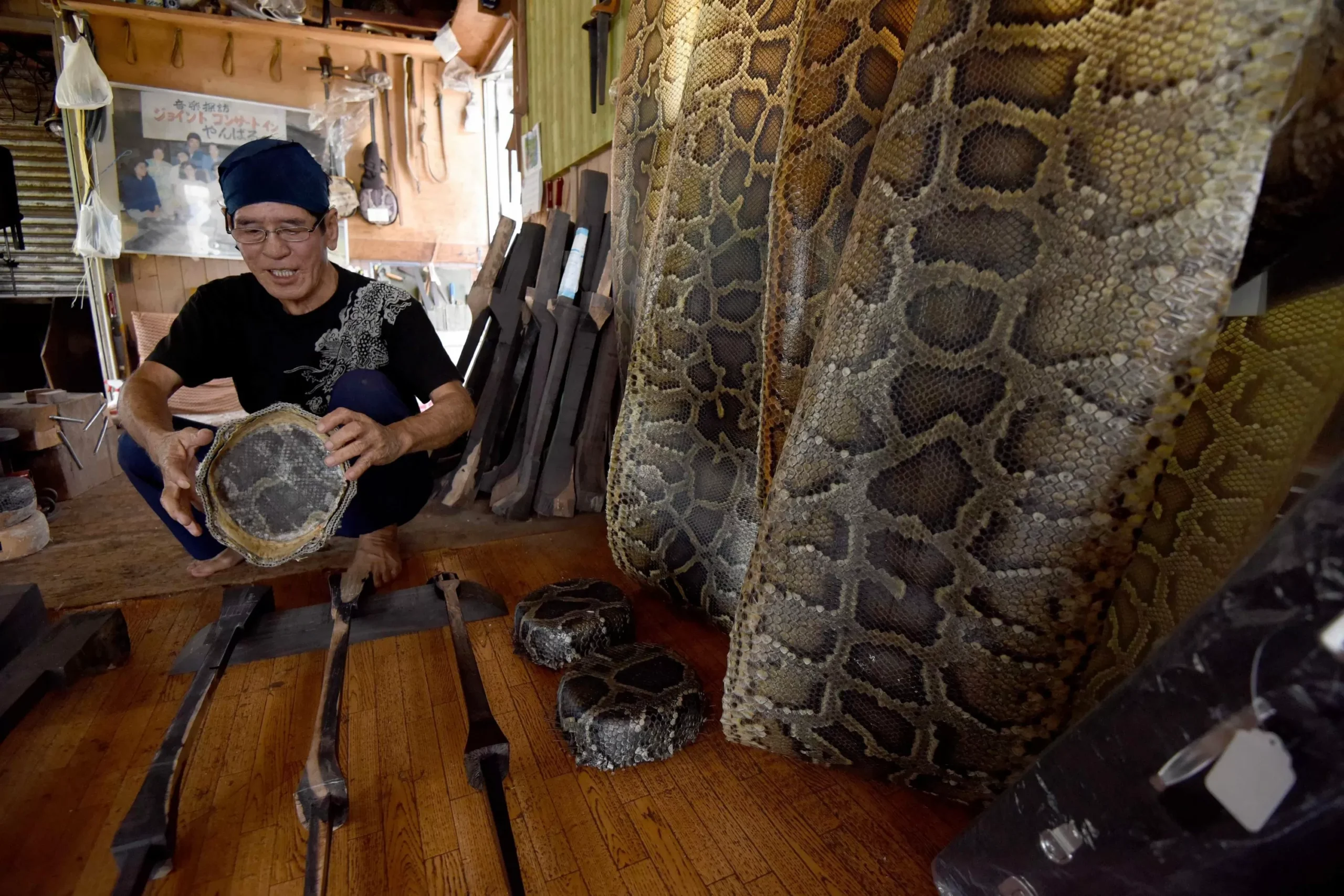
Amidst the lush green farmlands of central Thailand lies a warehouse that has been garnering attention for its unique residents – thousands of pythons. As people pass by, they can see these magnificent creatures coiled in containers, rearing and striking at the glass, mesmerizing onlookers with their graceful movements. Welcome to the world of python farming in Thailand.
The practice of python farming has been gaining momentum in recent years, with the country emerging as one of the biggest exporters of python skins. These skins are used for making luxury goods such as handbags, shoes, and belts, which are in high demand in the fashion industry. And the warehouse in central Thailand is one of the main hubs of this thriving industry.
Walking through the warehouse, one can’t help but be awestruck by the sheer number of pythons present. The containers are stacked from floor to ceiling, housing pythons of all sizes. This might seem daunting to some, but the truth is, these creatures are well taken care of here. The warehouse is a carefully controlled environment, providing the ideal conditions for the pythons to thrive.
The pythons are fed a nutritious diet of rats and mice, which are bred specifically for this purpose. This ensures that the pythons get the required nutrients and are not exposed to any harmful substances. The warehouse also has a team of trained professionals who work tirelessly to monitor the pythons’ health and wellbeing. Any signs of illness or injury are immediately addressed, and the pythons are given proper medical care.
But why are pythons being farmed in such large numbers? Some might argue that this is a cruel practice, but the truth is far from it. Python farming is a sustainable and eco-friendly way of producing exotic leather. It is a highly regulated industry, and strict measures are in place to ensure that the pythons are not harmed in any way. In fact, python farming has contributed to the conservation of these beautiful creatures.
In the past, pythons were often hunted for their skins, resulting in a decline in their wild population. With the introduction of python farming, the pressure on wild pythons has reduced significantly. This has allowed the wild populations to recover, and the overall numbers of pythons have increased. It is a win-win situation for both the fashion industry and the conservation of these magnificent creatures.
Furthermore, python farming has also created job opportunities for local communities in Thailand. Many people in the surrounding areas are employed in the farming and processing of python skins. This has not only provided them with a source of income but has also helped in the economic development of the region. The industry has also contributed to the country’s economy, with millions of dollars being generated through the export of python skins.
But python farming is not without its challenges. With the growing demand for python skins, some have raised concerns over the welfare of these creatures. However, it is essential to understand that python farming is highly regulated, and strict measures are in place to ensure the pythons’ wellbeing. The industry is constantly evolving, and efforts are being made to improve the standards of python farming continually.
In conclusion, the warehouse in central Thailand might seem like a strange sight at first, but upon closer inspection, one can see the positive impact it has on the environment, local communities, and the country’s economy. Python farming is a sustainable and responsible practice that allows us to appreciate these creatures’ beauty while also contributing to their conservation. So the next time you come across a python skin accessory, remember that it might have come from a warehouse in the lush humid farmlands of central Thailand, where these graceful creatures are reared with care and respect.